
KL in a day, without the guesswork. This full-day Kuala Lumpur highlights tour strings together hotel pickup/drop-off and a well-paced route so you spend less time figuring out transit and more time at the sights, from Batu Caves to Chinatown and Little India.
I also like that the route covers both modern landmarks and daily neighborhood life, with time at mosques and markets plus big photo moments around the Petronas skyline. The main thing to watch is the tour’s structure: some high-profile viewpoints like Petronas Twin Towers aren’t included in the base price, and a couple of stops are more shopping-focused than sightseeing-focused.
In This Review
- Key highlights you can count on
- Why this private KL tour feels easier than DIY
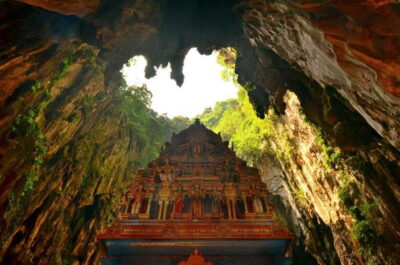
- Batu Caves: the top opener and what to do with your time
- The craft stops near Batu Caves: watches and batik (included tickets)
- Petronas Twin Towers and KL Tower: skyline views, and where extra tickets matter
- Royal Selangor pewter, Istana Negara, and the calm of Lake Gardens
- Independence Square, National Monument, and Parliament-area landmarks
- Sultan Abdul Samad, the River of Life, and mosque stops that feel different
- Central Market and the Chinatown core around Petaling Street
- Thean Hou Temple and Little India Brickfields: temple views and food culture
- Beryl’s Chocolate Kingdom and the value of short included breaks
- Price and logistics: when $54 is a great deal (and when it isn’t)
- Who this KL tour suits best
- Should you book this KL 23-attraction day?
- FAQ
- How long is the Kuala Lumpur city tour?
- Is hotel pickup and drop-off included?
- Are the Petronas Twin Towers and KL Tower tickets included?
- Is food included on the tour?
- Do I need to pay for a licensed tour guide?
- Can I get a full refund if I cancel?
Key highlights you can count on
- Private, air-conditioned door-to-door transport that keeps the day easy, especially if you want a slower pace
- Batu Caves first, with enough time to climb, look, and snap photos before the day gets busy
- A mix of Malaysia’s faiths and cultures across the day: Hindu temples, Chinese temples, Indian quarters, and two major mosques
- KL skyline time around Petronas and the KL Tower area (with clear note: tower entrances are extra)
- Included admission at several stops, including Royal Selangor pewter and National Monument
- English-speaking driver support so you’re not stuck guessing your way between neighborhoods
Why this private KL tour feels easier than DIY
Kuala Lumpur can be fast and spread out. Roads are busy, distances feel longer than you expect, and you’ll be tempted to hop on rides back and forth. What makes this tour work is the simple plan: you get a private car with hotel pickup and drop-off, then a route that hits the big sights and the cultural neighborhoods in one go.
I like that the timing is built for real viewing. This is not a speed-run with a coach line and a mad scramble. You get short-to-medium time blocks at each stop, so you can actually step inside where it makes sense, take photos, and regroup without stress.
The other strong point is how the day is split between “KL icons” and “KL life.” You spend time with skyline landmarks, then you also get the traditional city fabric: temples, markets, and heritage buildings around major squares and rivers. It’s a good first-day tour if you want bearings fast.
One more practical note: your driver is English-speaking, and the tour is designed as an easy orientation for first-time visitors. If you ask questions on the spot—food, neighborhoods, etiquette—this type of route usually delivers better answers than a static guidebook.
The capital in one sweep, more circuits
Batu Caves: the top opener and what to do with your time
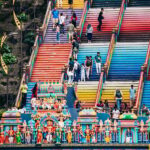
Kicking off at Batu Caves is a smart move. It’s one of the most iconic sights near Kuala Lumpur, and it’s also one of those places where arriving earlier helps. You’re looking at a limestone outcrop with three main caves, temples, and Hindu shrines. Even if you’ve seen photos, being there in person makes it feel bigger and more alive.
Plan on about 45 minutes at the caves. That’s enough time to get your bearings, decide how far you want to climb, and soak in the scene without feeling rushed. Wear something comfortable for stairs, and bring a water bottle if you run hot easily. Your driver can usually help with timing so you’re not stuck in the busiest moments.
A neat value detail: the Batu Caves stop lists admission as free. That matters because you’ll already be thinking about extra tower ticket costs later in the day. Batu Caves gives you a big “included wow” early.
One more reason to like the opener: after Batu Caves, the rest of the day becomes easier to understand. You start seeing Kuala Lumpur as a city shaped by many communities and belief systems, not only glass skyscrapers.
The craft stops near Batu Caves: watches and batik (included tickets)
After Batu Caves, the tour shifts into two included craft-and-retail stops. These are Geneve Timepiece Sdn Bhd and East Coast Batik Sdn Bhd (Batik CHONG).
- Geneve Timepiece Sdn Bhd (about 30 minutes, admission included) is a wholesale/retail watch stop connected to the wider distribution of timepieces across Asia. Even if you don’t plan to buy, it’s a quick way to see how products move from distribution networks to local retail.
- East Coast Batik / Batik CHONG (about 30 minutes, admission included) is one of the older batik and handicrafts centers in the Klang Valley, established in 1974. The key point here is educational: batik isn’t just a pattern on cloth. It’s a craft with design work and technique.
Here’s the fair warning: these stops can feel like “shopping breaks.” If you love crafts, great. If you’re hoping for constant outdoor sightseeing, you might wish one of these minutes was instead spent walking through a nearby neighborhood. Still, they’re included stops, and the batik angle can add context to the cultural theme of the whole day.
My practical advice: treat these as short stops, not anchor attractions. Wander lightly, ask one or two questions, and don’t feel pressured to buy anything.
Petronas Twin Towers and KL Tower: skyline views, and where extra tickets matter
Your itinerary includes time at the Petronas Twin Towers and the KL Tower. Both are top skyline viewpoints, but the budget math changes because entrance fees are not included for these towers.
- Petronas Twin Towers (about 45 minutes, entrance not included): The towers are a modern Malaysia icon at roughly 451.9m. They’re the centerpiece of the KLCC development, and they’re what most people come to photograph.
- KL Tower (about 30 minutes, entrance not included): KL Tower sits on Bukit Nanas at 421m above sea level, with an Islamic-heritage-inspired design. It’s all about viewpoints and city skyline angles.
The value issue is simple: the tour price is $54 per person, but the base doesn’t cover those tower entries. Petronas Twin Towers lists an entry fee of $35 per person, and KL Tower also lists $35 per person. You’ll want to decide early whether you’re paying for one tower or both.
Here’s how I’d choose:
- If you want the most famous KL photo backdrop, pick Petronas.
- If you care more about high-city perspective and potentially a different skyline angle, consider KL Tower.
- If your day is packed and you’re not trying to maximize tickets, prioritize one paid viewpoint.
Also, towers can mean lines and timed entry constraints. This tour gives you a set window, so you’ll want to arrive with the mindset that part of the hour is just spent getting inside and getting to your viewing spot.
Royal Selangor pewter, Istana Negara, and the calm of Lake Gardens
Once you move away from the densest skyline area, the day gets more atmospheric.
Next up is the Royal Selangor Visitor Centre. You’ll spend around 20 minutes here, and admission is listed as included. Royal Selangor is the place to experience pewter as a craft, not just as souvenirs. Even if you’re not shopping, it helps you understand the skill and finishing that go into metalwork.
Then you’ll see Istana Negara, the National Palace, the official residence of the Malaysian King. It’s a free stop with a short viewing window (about 15 minutes). You won’t be doing a long museum-style visit, but the architecture and the idea of the palace make for a quick “state power” contrast to the city’s markets and street temples.
After that, the itinerary includes the Perdana Botanical Gardens area (about 200 acres with walking and jogging trails around lakes). This is a good breathing spot after structured stops. Even a short visit gives your body a change of pace from traffic and indoor queues.

Independence Square, National Monument, and Parliament-area landmarks
One of the most meaningful stretches on this tour is the set of civic landmarks around Dataran Merdeka (Independence Square), National Monument, and nearby government buildings.
- National Monument (about 30 minutes, admission included): It’s built to honor those who gave their lives for peace and freedom, especially during Malaysia’s struggle against communism. This stop adds weight to the day. You’re not just sightseeing; you’re reading the country through memorial design.
- Dataran Merdeka (about 30 minutes, admission included): The square is opposite the Sultan Abdul Samad building and sits right by the Royal Selangor club. It’s the historical place where the union flag was lowered.
You’ll also pass the Malaysian Houses of Parliament area, located near the National Monument at Lake Gardens. Even without a deep tour inside the complex, simply seeing the location helps you connect the squares and memorials to how the country governs today.
If your goal is to understand Kuala Lumpur beyond the skyline, this civic section is where the tour earns its keep. It gives you a storyline: from national identity to city layout to public memory.
Sultan Abdul Samad, the River of Life, and mosque stops that feel different
This is where Kuala Lumpur turns from monuments into lived-in religion and architecture.
You’ll spend time around Sultan Abdul Samad Building (about 30 minutes, admission included). The building dates to 1890 and features a distinctive Moorish design. It’s a photo magnet, but it’s also useful as a landmark because it anchors the whole Independence Square zone.
Then the tour includes The River of Life (free). It’s described as a convergence point of two rivers, Klang River and Gombak River, near major mosques like Masjid Jamek and Sultan Abdul Samad areas. It’s a small stop, but it helps you connect geography to culture.
The itinerary also includes two major mosques:
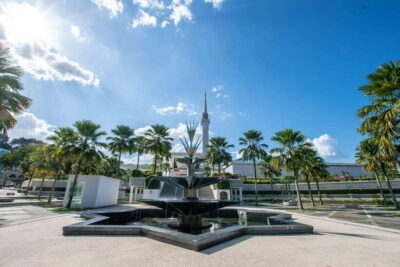
- National Mosque (Masjid Negara): free, about 20 minutes. Notable features include the star-shaped dome and a tall 73m minaret. The design combines modern architecture elements with Islamic design ideas.
- Jamek Mosque (Sultan Abdul Samad Jamek Mosque): about 20 minutes, admission included. It was designed by Arthur Benison Hubback (1909) and sits at the Klang and Gombak river junction.
These two stops feel different in mood and architectural approach. Even with limited time at each, you get enough to compare styles and understand why Kuala Lumpur’s religious architecture matters. If you’re traveling with kids, this is also a strong section: architecture stops often hold attention better than a pure driving tour.
Quick practical note: mosques are active religious places. Dress modestly and plan on respectful behavior.
Central Market and the Chinatown core around Petaling Street
From the civic and mosque area, the tour shifts into commerce and community. You’ll visit Central Market Kuala Lumpur (about 20 minutes, free). It began as a wet market in 1888 and was built by Yap Ah Loy, a Chinese Kapitan. Today it’s a heritage market stop where you can snack, browse, and watch the rhythm of the city.
Then comes Sri Maha Mariamman Temple (about 20 minutes, admission included). It’s the oldest Hindu temple in Kuala Lumpur, founded in 1873 and located at the edge of Chinatown on Jalan Bandar (formerly High Street). It’s a powerful contrast to the mosque architecture you saw earlier—different faith, different symbolism, same city.
After that you’ll be in the Petaling Street area, the core of Chinatown. Petaling Street is described as a market street where haggling is common and the area is crowded with locals and tourists. The stop is about 20 minutes with admission included.
What you can do in that short window:
- Look for street snacks if your day schedule allows.
- Watch the market flow.
- Buy small souvenirs if you enjoy bargaining.
- Take photos, but keep an eye on where people are walking.
Because the Chinatown area is active, I’d avoid planning anything too rigid right there. Treat it like a wandering zone that you can enter and exit quickly.
Thean Hou Temple and Little India Brickfields: temple views and food culture
The day also includes two stops that help you understand Kuala Lumpur’s Chinese and Indian communities.
First, Thean Hou Temple (about 20 minutes, admission included). It’s a six-tiered temple dedicated to the Chinese sea goddess Mazu, on Lorong Bellamy at Robson Heights overlooking the city. Even though your time is short, it’s the kind of place where the tiered layout makes photos easier and adds a sense of “arrival.”
Then you end up at Little India / Brickfields (about 20 minutes, admission included). Brickfields began as a brick-making center in the late 19th century and was affected by a huge fire and flood in 1881. The area has a strong cultural identity today, and that’s what you’ll notice right away.
In this short time block, you can:
- Walk around the main streets and observe the colors and signage.
- Check out small shops if something catches your eye.
- Focus on photos and impressions rather than trying to cover everything.
If you’re the type who wants a food-and-neighborhood tour, these last stops are where your mind starts connecting the dots. You’ve seen national monuments and religious architecture earlier; now you see how communities express identity through daily street life.
Beryl’s Chocolate Kingdom and the value of short included breaks
One of the included, short stops on this itinerary is Beryl’s Chocolate Kingdom (about 20 minutes, admission included). It’s described as a chocolate maker using cocoa beans from Ghana, and visitors get to sample many types of chocolate for free, with over 100 varieties mentioned.
If you’re traveling with kids or you just want a calmer indoor moment, this works. It also helps break up the day so you’re not only outdoors and only walking.
The balanced way to see these last stops is this: they’re not the same category as Petronas Twin Towers or Batu Caves. They’re more about variety and small, included experiences. If you treat them as palate cleansers—sweet snack, photo stop, quick look—you’ll feel like the day has rhythm instead of pressure.
Price and logistics: when $54 is a great deal (and when it isn’t)
Let’s talk value straight. The tour is listed at $54 per person, and it includes:
- Air-conditioned vehicle
- English-speaking driver
- Hotels pick-up and drop-off
- A handful of included admissions across the itinerary
- A private tour setup where only your group participates
That’s a strong value structure if you want a guided route but don’t want the hassle of planning transit between distant areas.
Where the value can shift: major tower entrances are extra. Petronas Twin Towers and KL Tower list $35 each per person. If you choose both, you’re adding $70 on top of the $54 base (before any other optional costs).
So the best deal scenario is:
- You want a full day of major highlights,
- You’re fine paying tower entry fees if you care about views,
- You don’t want to spend your own time building a route and coordinating ride apps.
One more logistics consideration: this is driver-led. The itinerary is packed with many stops, and your driver may give varying depth of explanation depending on the day and flow. I’ve seen praise for drivers like Bishnu, Geva, Shamsor, Salman, Fauzi, and Aslam for being friendly and clear, plus for making navigation feel smooth. That’s the ideal case. If you’re the type who wants deep, in-depth guided storytelling at every single doorway, you might find this format more “route + viewpoints” than “museum-style guided walking.”
Who this KL tour suits best
This tour is a great fit if:
- It’s your first time in Kuala Lumpur and you want a compact overview.
- You prefer the comfort of a private vehicle and limited transfers.
- You like mixing big icons with cultural neighborhoods (temples, mosques, markets).
- You’re traveling with seniors or kids and want less walking between distant areas.
It may be less ideal if:
- You want a slow, artsy day where you linger long at fewer places.
- You strongly dislike short shopping stops inside set time windows.
- You only care about one or two attractions and would rather build a cheaper plan around them.
Should you book this KL 23-attraction day?
If you want an efficient, first-time KL day with hotel pickup, air-conditioned comfort, and a route that covers both modern and cultural Kuala Lumpur, I’d say yes. It’s also priced in a way that makes sense once you compare it to the hassle (and time) of figuring out how to string Batu Caves, Petronas area, civic landmarks, mosques, and Chinatown together on your own.
Before you book, decide your tower plan. If you’re paying for Petronas and KL Tower, the total cost rises fast—but you’ll also get two very different skyline perspectives.
My decision rule:
- Book it if you want convenience and a full-day overview.
- Skip one tower ticket if you want to keep costs controlled.
- Bring patience for the included craft and retail stops, and use them as short breaks rather than part of your must-see list.
FAQ
How long is the Kuala Lumpur city tour?
The tour runs about 7 to 8 hours.
Is hotel pickup and drop-off included?
Yes. Round-trip hotel transfer is included, along with an air-conditioned vehicle and an English-speaking driver.
Are the Petronas Twin Towers and KL Tower tickets included?
No. Entrance fees for Petronas Twin Towers and KL Tower are not included in the base price.
Is food included on the tour?
Food and drinks are not included unless specified.
Do I need to pay for a licensed tour guide?
A licensed tour guide fee of $90 per booking is listed as not included.
Can I get a full refund if I cancel?
Yes. Free cancellation is available up to 24 hours before the experience start time for a full refund.
Filed Under Kuala Lumpur
- Kuala Lumpur: Batu Caves Half-Day Tour with Pick-Up Option
★ 4.5 · 4,288 reviews - Private Half-Day Batu Caves and Cutural Tour in Kuala Lumpur
★ 5.0 · 3,107 reviews - Sambal Streets Kuala Lumpur Food Tour with 15+ Tastings
★ 5.0 · 2,438 reviews - Historical Malacca Guided Day Tour (Shared Tour)
★ 5.0 · 2,172 reviews
The Grand Sweep of KL
- Kuala Lumpur: Ronda Hop-On Hop-Off City Sightseeing Bus Pass
★ 3.7 · 833 reviews - Kuala Lumpur: Half-Day City Tour
★ 4.4 · 769 reviews - Kuala Lumpur: City Tour & Batu Caves Combo
★ 4.4 · 722 reviews - The Best of Kuala Lumpur Classic
★ 5.0 · 675 reviews
Fresh Reviews from the Klang Valley
- Kuala Lumpur by Night: Food, Culture & City Lights Tour”
★ 4.5 · 3 reviews - Kuala Lumpur Customizable Tour
★ 5.0 · 3 reviews - National Zoo with Giant Panda
★ 3.5 · 3 reviews - Kuala Lumpur City to Kuala Lumpur International Airport Transfer
★ 5.0 · 3 reviews - Private Magical View With Petronas Tower & Cultural Dinner
★ 4.2 · 3 reviews
Kuala Lumpur Sightseeing Tours, compared.
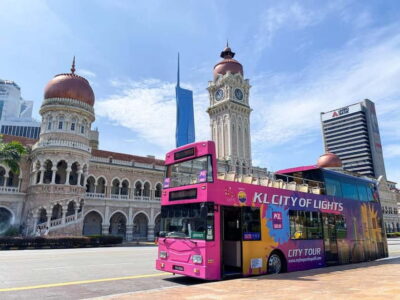 ★ 3.7Ronda Hop-On Hop-Off City Sightseeing Bus PassFrom $10833 reviews
 ★ 4.4Half-Day City TourFrom $12769 reviews
 ★ 4.4City Tour & Batu Caves ComboFrom $15722 reviews
 ★ 5.0The Best of Kuala Lumpur ClassicFrom $65675 reviews
 ★ 4.6Full-Day Private City Highlights TourFrom $50589 reviews
 ★ 4.5Kuala Lumpur City Tour Full Day 8 hoursFrom $56575 reviews
 ★ 4.6From Kuala Lumpur: City Tour with 21 AttractionsFrom $19512 reviews
 ★ 5.0️ Kuala Lumpur Instagram Tour: Most Famous Spots (Private & All-Inclusive)From $107429 reviews
Browse the lists this tour appears in