
Reviewed · KUALA LUMPUR SIGHTSEEING TOURS
Kuala Lumpur City Tour – Half Day
KL in one tight half-day needs the right plan. This small-group tour strings together Kuala Lumpur’s most recognizable sights with hotel pickup and a pace that keeps you moving without feeling rushed.
I especially like that you can choose where to pay admission and where to just look around. That flexibility means you can spend your money on the spots you care about most—like the Petronas viewpoint options—while skipping the rest.
One possible drawback: this is more “short stops and photo time” than a slow, in-depth tour. You’ll spend only about 10–15 minutes at most major landmarks, so if you want deep museum-style time, plan an extra afternoon elsewhere.
In This Review
- Quick Takeaways
- Price and logistics: what $25.05 really covers
- The 3.5-hour pace: seeing KL without burning the day
- Stop-by-stop: what each landmark is like in real time
- Istana Negara (National Palace): changing of the guards + exterior photos
- National Monument (Tugu Negara): independence story in a bronze moment
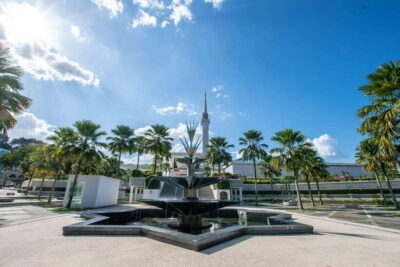
- National Mosque (Masjid Negara): massive capacity and green setting
- Old KL Railway Station and Sultan Abdul Samad area: photo belt before the skyline
- Dataran Merdeka (Merdeka Square): KL’s headline square
- Thean Hou Temple: Chinese architecture and the mix of beliefs
- Petronas Twin Towers: skyline photos, plus paid access if you want it
- Harriston Chocolate: a sweet quick break you can skip
- Malaysia Tourism Centre: your info hub and the trip’s practical bookend
- Small group experience: when the guide really matters
- Where this tour is a great fit (and where it isn’t)
- Best for first-timers and busy schedules
- Best for travelers who like flexible spending
- Not ideal if you want long, slow visits
- One practical consideration: comfort can vary
- Before you go: how to get the most from your 3.5 hours
- Should you book this Kuala Lumpur City Tour?
Quick Takeaways
- Max 15 people keeps the day feeling personal and easy to manage
- Hotel pickup within 5 KM of KLCC saves time and hassle
- Short, clear stops let you see a lot without losing your whole day
- Flexible admissions means you control what you pay for
- Petronas options cost extra if you want skybridge/observation access
- English-speaking guide/driver helps you understand what you’re seeing fast
Price and logistics: what $25.05 really covers
At $25.05 per person for roughly 3 hours 30 minutes, this is priced like a value intro to Kuala Lumpur’s headline sights. The big “yes” for your wallet is what’s included: air-conditioned transport plus an English-speaking driver/guide, and round-trip hotel pickup and drop-off—but only if your hotel is within 5 KM of KLCC.
The “watch-outs” are also pretty clear in the terms. Food and beverages are not included, and admission tickets are mostly optional depending on what you choose to enter. Some stops have free access, while others—like the Petronas observation/skybridge—are not included.
So the real value comes down to your style. If you want a smart sampler that gets your bearings fast, this works. If you already love every landmark here and want long time at each one, the short-stop pace may feel limiting.
The capital in one sweep, more circuits
The 3.5-hour pace: seeing KL without burning the day
This tour is built for efficiency. You hop between major landmarks in an air-conditioned vehicle, then stop for quick looks, photos, and orientation.
Most of the scheduled photo windows are 10–15 minutes. That’s enough time to:
- walk the immediate area,
- take a few good pictures,
- and get a basic sense of the place before the next move.
It’s also enough time to avoid decision fatigue. You’ll be guided to the most important viewpoints, then you can choose whether you want to pay admission or just enjoy the exterior/more general area.
If you’re sensitive to crowds or heat, the structure is practical: the vehicle rides keep you comfortable, and the quick timing helps you avoid spending too long standing in one spot.
Stop-by-stop: what each landmark is like in real time
Istana Negara (National Palace): changing of the guards + exterior photos
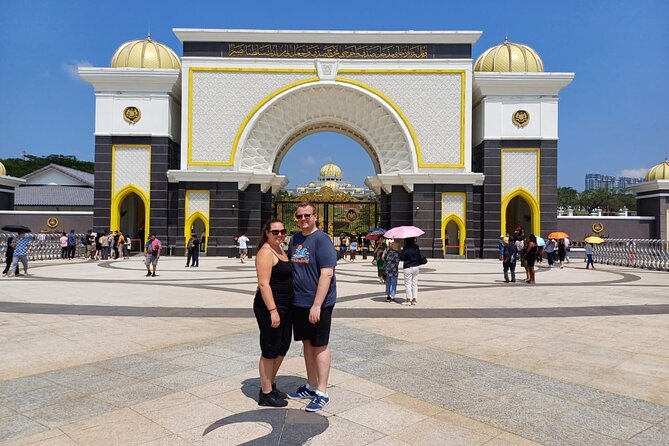
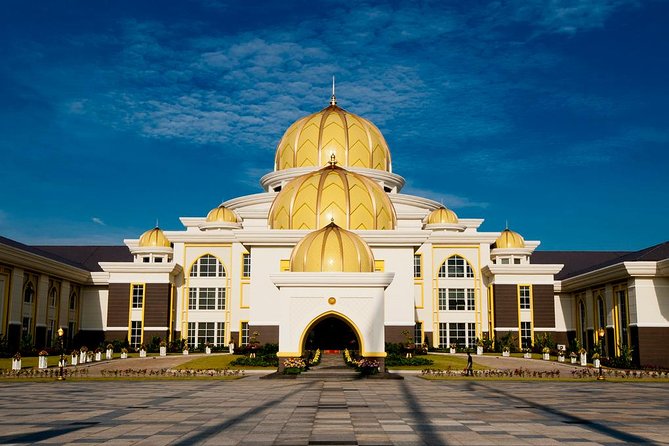
Your first stop is Istana Negara, the official residence of the King of Malaysia. Here’s the key expectation: you can’t go inside. The payoff is the exterior, plus the chance to catch the changing of the guards, which happens hourly.
Even if you miss the exact moment, this stop is still useful. You’ll get the feel of the palace grounds and architecture, and the “hourly guard change” is one of those KL moments that makes a quick stop feel special.
What to do with your time: position yourself for a clear exterior photo angle and keep an eye on timing so you can catch the guards when possible.
Consideration: because you’re not entering, plan to enjoy the sight from outside rather than expecting a full palace visit.
National Monument (Tugu Negara): independence story in a bronze moment
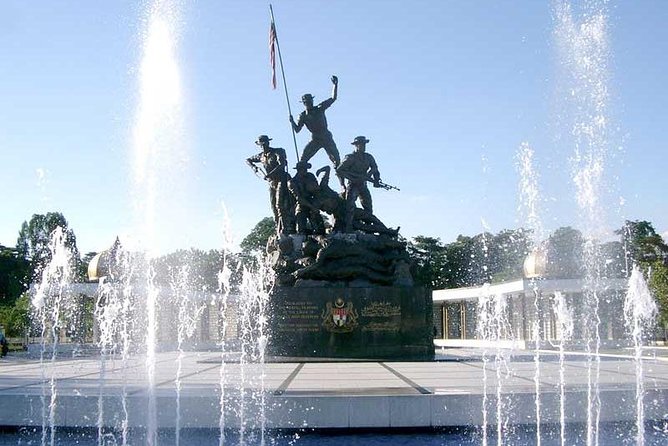
Next up is National Monument (Tugu Negara), a bronze tribute to lives lost during Malaysia’s fight for independence. It’s designed by American architect Felix de Weldon—a detail worth knowing because it adds meaning beyond just “big monument photo.”
This stop is short, but it works as an emotional anchor for the trip. You go from royal palace symbolism to a national remembrance site that frames why Malaysia’s independence matters.
What to do with your time: walk around enough to see the monument clearly from more than one angle, then take a couple photos that show scale.

National Mosque (Masjid Negara): massive capacity and green setting
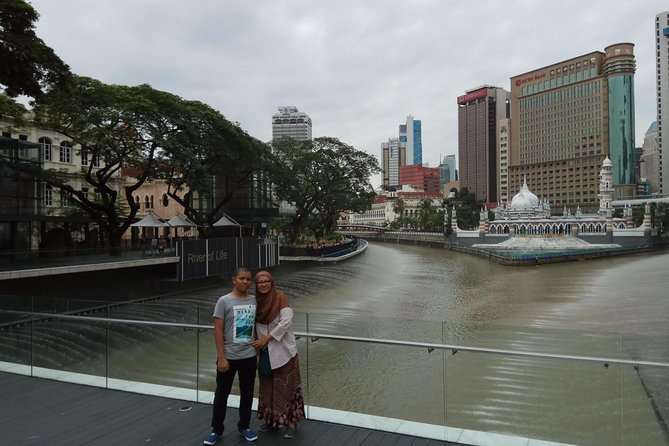
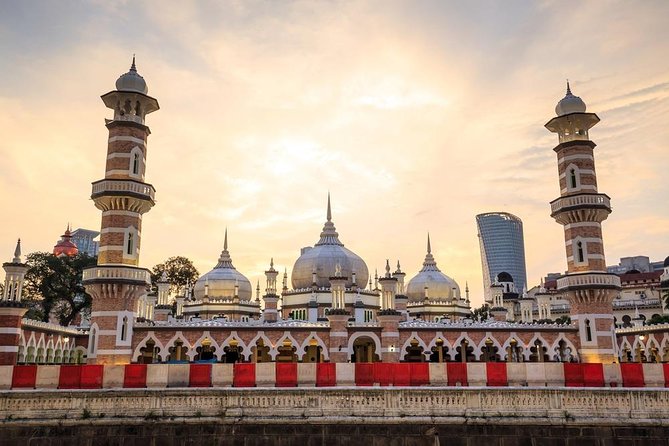
Then you’re at National Mosque (Masjid Negara). This is one of those places that immediately tells you what faith and architecture mean in daily life.
The information given for the mosque is impressive: it can hold up to 15,000 people, and it sits within 13 acres of lush greenery. That combination—space plus green—makes the mosque feel more than just a building. It feels like a designed environment.
What to do with your time: take your photos, then slow down for a minute just to absorb the size. With only a short stop, you want at least one moment where you stop shooting and start looking.
Consideration: a short visit means you may not have time to fully explore every corner. Think of this as “see it well enough to understand it,” not “complete a long worship-site tour.”
Old KL Railway Station and Sultan Abdul Samad area: photo belt before the skyline
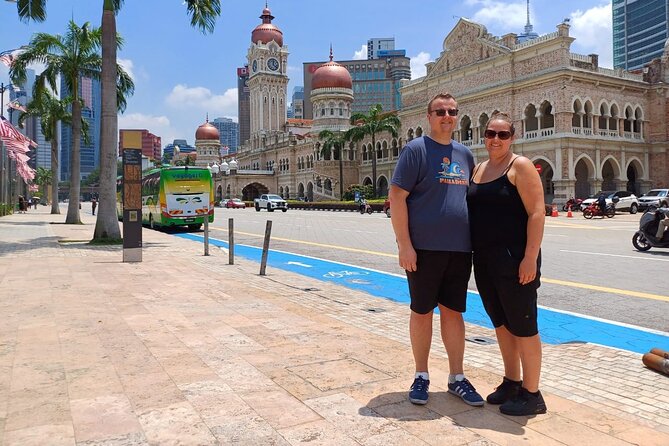
Your route also includes the Old KL Railway Station, one of the city’s most recognizable landmarks. It became especially famous before the Petronas Twin Towers reshaped KL’s global image.
A helpful context cue: this station is often photographed alongside the Sultan Abdul Samad building, creating a classic “old meets new” visual pairing in central Kuala Lumpur.
This segment is great for setting up your day’s photo rhythm. You’re moving from monuments and religious sites into KL’s architectural identity—columns, facades, and the kind of streetscape that makes you feel like you’re walking through postcards.
What to do with your time: take a few wide shots first, then zoom in for details like signage, arches, and building lines.
Dataran Merdeka (Merdeka Square): KL’s headline square
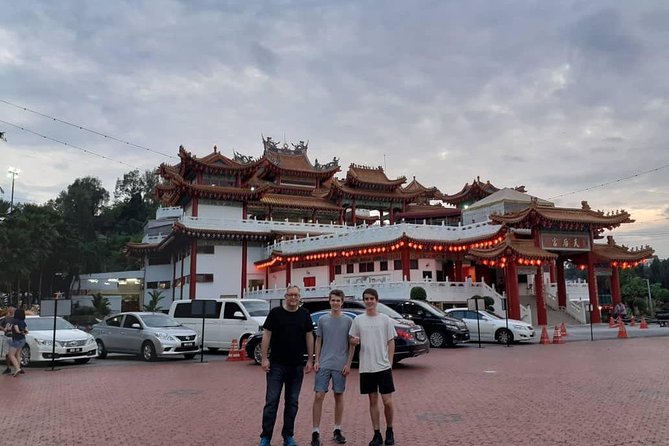
Next is Dataran Merdeka, also known as Merdeka Square. This is described as KL’s best known landmark, and it’s easy to see why. The square sits in front of the Sultan Abdul Samad building, with strong visual structure for photos.
This is a great stop for orientation. If you can picture where Merdeka Square sits, you’ll understand the city’s layout much better for the rest of your stay. It’s also a place that feels like a hub—government-era architecture on one side, open space on the other, and plenty of angles to capture the “KL central” feeling.
What to do with your time: get one photo straight-on showing the square’s openness, and one from slightly off-center to include more of the Sultan Abdul Samad facade.
Thean Hou Temple: Chinese architecture and the mix of beliefs
Then you’ll reach Thean Hou Temple, a Chinese temple complex. The standout detail here is the spiritual blend: the site highlights the synergy of Buddhism, Taoism, and Confucianism. It’s not just a quick look—it’s an architectural and symbolic mix.
The temple is also described as having numerous statues, so this is the kind of place where even a short stop can produce lots of photo opportunities.
What to do with your time: focus on one or two main viewpoints rather than trying to see everything. Statues, carvings, and rooflines can pull you in fast, so pick your favorites early.
Consideration: if you’re photographing people, be mindful and respectful. Temples are active spaces, even when your stop is brief.
Petronas Twin Towers: skyline photos, plus paid access if you want it
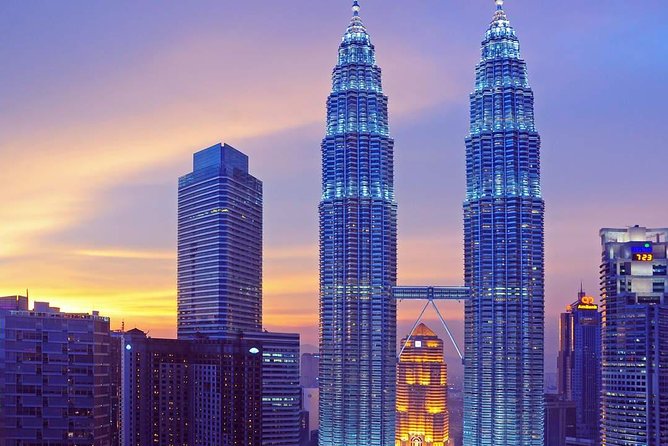
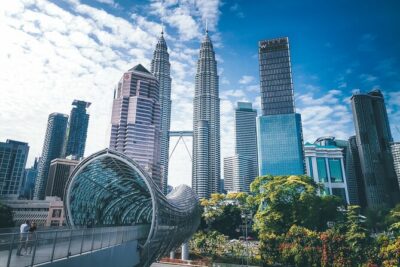
The final major “wow” stop is the Petronas Twin Towers. Even without paying for anything, they’re made for photos: tall, symmetrical, and surrounded by a central-city energy you can feel from the ground.
Here’s the big practical point: observation deck and skybridge tickets are not included. So if you want the view from higher up—or that famous skybridge experience—you’ll need to plan for extra cost and timing.
What to do with your time: if you’re not buying tickets, prioritize best exterior photo angles and get a shot that includes the towers’ full height. If you do want to go up, use your time wisely and know that ticketed access can change the flow of your visit.
Harriston Chocolate: a sweet quick break you can skip
One of the more playful stops is Harriston Chocolate. The stop is basically for a chocolate taste or purchase, leaning into the idea of rich, creamy chocolate and the brand’s presence in Malaysia.
This is a fun breather if you like sweet snacks and you want a small treat break during a fast schedule. It’s also the kind of stop that’s easy to handle even if you don’t love shopping.
What to do with your time: if you’re sugar-inclined, grab a small item so you don’t need to search later. If not, treat it as a quick pit stop and move on.
Malaysia Tourism Centre: your info hub and the trip’s practical bookend
At the Malaysia Tourism Centre, you’ll find a hub for tourist information, a gift shop, and the chance to catch festivals or music performances depending on what’s going on. It’s also listed as the starting and end point for visitors who are located outside the pickup zone.
That makes it more than just a stop. It’s useful if you want to pick up tips, map ideas, or suggestions for the rest of your day after the tour ends.
What to do with your time: if you end early or you want ideas for later, check what’s happening on-site and ask for current pointers (you’ll get more value than guessing).
Small group experience: when the guide really matters
With up to 15 travelers, your day usually feels like a shared outing rather than a cattle-line bus tour. That matters because it gives the driver/guide room to explain what you’re seeing and keep the timing realistic.
In particular, one guide name comes up in the context of clear storytelling: Fouzi. The style you can hope for (based on how this tour is described by guests) is explanation plus practical time for photos—so you’re not just dropped off and left to figure it out alone.
Still, a balance note: the schedule is structured with short windows. So even the best guide can’t turn every stop into a long sit-down history lesson. You’ll get the “what this is and why it matters” level. For deeper learning, you’ll want to pick one or two stops and return later under your own steam.
Where this tour is a great fit (and where it isn’t)
Best for first-timers and busy schedules
If it’s your first time in KL and you want a reliable “greatest hits” set of stops, this works well. You’ll see:
- Istana Negara
- National Monument
- National Mosque
- Old KL Railway Station
- Merdeka Square
- Thean Hou Temple
- Petronas Twin Towers
- Plus a couple bonus stops like chocolate and the tourism centre
For many people, that’s enough to help you decide what you want to go back to later.
Best for travelers who like flexible spending
Because admissions aren’t all included, you can match your spend to your interests. If you don’t care about climbing for views, you can keep costs lower. If Petronas access is a must, you can allocate your money there.
Not ideal if you want long, slow visits
If your goal is soaking in temples, reading every plaque, or spending an hour at each location, you’ll feel the time pressure. This tour is designed to move. It’s a half-day orientation, not a deep-dive day.
One practical consideration: comfort can vary
One detail worth keeping in mind: there was feedback about a vehicle feeling old or dirty inside. That doesn’t mean every ride will be the same, but it’s fair to suggest you check the car condition when you board. If something feels off, ask politely about cleaning or seating.
Before you go: how to get the most from your 3.5 hours
To make this tour feel worth it, I’d plan around three simple ideas.
First, decide your Petronas plan ahead of time. If skybridge or observation deck tickets matter to you, you’ll want to budget both money and time—because it changes what you can do inside the 3.5-hour window.
Second, pack for comfort. Expect a mix of walking and waiting. Even though transportation is air-conditioned, you’ll still be outside at each stop for photos.
Third, build one “follow-up” plan for later. With short stops, your memory will work best if you return to one site the same day or the next. Merdeka Square for atmosphere, Thean Hou Temple for details, or Petronas for evening light—pick one.
Should you book this Kuala Lumpur City Tour?
Book it if you want a low-stress introduction to KL’s top landmarks, with hotel pickup (within 5 KM of KLCC) and a small group size that keeps the day organized. The price feels fair for what’s included, especially because you control optional admissions instead of paying for everything automatically.
Skip it or pair it with other plans if you’re the type who needs longer time per site. This tour is built for quick orientation and photo windows, not slow exploration.
If you want, tell me your hotel area (or whether you’re near KLCC), and what you care about most—history, religion/temples, architecture, or skyline views—and I’ll suggest the best way to structure the rest of your day around this tour.
Filed Under Kuala Lumpur
- Kuala Lumpur: Batu Caves Half-Day Tour with Pick-Up Option
★ 4.5 · 4,288 reviews - Private Half-Day Batu Caves and Cutural Tour in Kuala Lumpur
★ 5.0 · 3,107 reviews - Sambal Streets Kuala Lumpur Food Tour with 15+ Tastings
★ 5.0 · 2,438 reviews - Historical Malacca Guided Day Tour (Shared Tour)
★ 5.0 · 2,172 reviews
The Grand Sweep of KL
- Kuala Lumpur: Ronda Hop-On Hop-Off City Sightseeing Bus Pass
★ 3.7 · 833 reviews - Kuala Lumpur: Half-Day City Tour
★ 4.4 · 769 reviews - Kuala Lumpur: City Tour & Batu Caves Combo
★ 4.4 · 722 reviews - The Best of Kuala Lumpur Classic
★ 5.0 · 675 reviews
Fresh Reviews from the Klang Valley
- Kuala Lumpur by Night: Food, Culture & City Lights Tour”
★ 4.5 · 3 reviews - Kuala Lumpur Customizable Tour
★ 5.0 · 3 reviews - National Zoo with Giant Panda
★ 3.5 · 3 reviews - Kuala Lumpur City to Kuala Lumpur International Airport Transfer
★ 5.0 · 3 reviews - Private Magical View With Petronas Tower & Cultural Dinner
★ 4.2 · 3 reviews
Kuala Lumpur Sightseeing Tours, compared.
 ★ 3.7Ronda Hop-On Hop-Off City Sightseeing Bus PassFrom $10833 reviews
 ★ 4.4Half-Day City TourFrom $12769 reviews
 ★ 4.4City Tour & Batu Caves ComboFrom $15722 reviews
 ★ 5.0The Best of Kuala Lumpur ClassicFrom $65675 reviews
 ★ 4.6Full-Day Private City Highlights TourFrom $50589 reviews
 ★ 4.5Kuala Lumpur City Tour Full Day 8 hoursFrom $56575 reviews
 ★ 4.6From Kuala Lumpur: City Tour with 21 AttractionsFrom $19512 reviews
 ★ 5.0️ Kuala Lumpur Instagram Tour: Most Famous Spots (Private & All-Inclusive)From $107429 reviews
Browse the lists this tour appears in