
Reviewed · KUALA LUMPUR SIGHTSEEING TOURS
Kuala Lumpur City Tour with 21 Attraction (Private)
21 stops in one day—mostly quick hits. This private Kuala Lumpur city tour strings temples, palaces, markets, and skyline icons into one well-timed loop with pickup and a mobile ticket.
I especially like the mix of cultures and styles—Thean Hou Temple, the National Mosque, and Sri Maha Mariamman Temple all hit different design worlds in the same outing. I also like that many stops list admission tickets as free, so your day budget stays mostly focused on food and snacks.
The main trade-off is time at each stop. A lot of the schedule is 5–20 minutes, so you’ll want to move fast, prioritize photos, and save long hangs for later.
In This Review
- Key highlights you’ll feel right away
- A One-Day Hits Tour: How the 8 Hours Really Work
- Price and Value: Why $61 Makes Sense (and when it doesn’t)
- Pickup, timing, and your game plan for a schedule this full
- Thean Hou Temple and Brickfields: Start with KL’s religious architecture and street life
- Istana Negara and the National Monument + ASEAN Sculpture Garden
- National Mosque and Perdana Botanical Garden: faith meets calm breaks
- Batu Caves: the big-ticket stop with strict rules
- Kuala Lumpur Sentral, Dataran Merdeka, and the River of Life: the city’s “then and now”
- Merdeka 118, KL Tower, and Petronas Twin Towers: three skyline moments, different moods
- Chinatown, Central Market KL, Guan Di Temple, and Jamek Mosque: older KL in layers
- Jadi Batek Gallery and Beryl’s Chocolate Kingdom: cultural skills and sweet rewards
- Sri Maha Mariamman Temple, KL Tower, and the Twin Towers: closing with faith and wow-factor views
- Who should book this private KL tour?
- FAQ
- How long is the Kuala Lumpur City Tour with 21 Attraction (Private)?
- What time does the tour start?
- Is hotel pickup included?
- Are tickets to the attractions included?
- What should I wear for Batu Caves?
- Is this a private tour?
- Is free cancellation available?
- Is there a minimum number of adults required?
Key highlights you’ll feel right away
- A tight 8-hour route that still covers 21 major Kuala Lumpur sights
- Most attractions have free admission tickets listed (big savings)
- Religious-site mix: Buddhist/Taoist/Confucian temple, Hindu temple, and major mosques
- Batu Caves with clear dress and footwear rules so you don’t get turned back
- Multiple skyline moments: Merdeka 118, KL Tower, and Petronas Twin Towers
- Stops for hands-on culture and treats: Jadi Batek Gallery and Beryl’s Chocolate Kingdom
A One-Day Hits Tour: How the 8 Hours Really Work
This is built as an 8-hour sampler of Kuala Lumpur. You’re not doing one thing slowly; you’re getting a fast-moving overview across several neighborhoods, then returning to a few “wow” moments like the skyline.
Most stops are short, often around 10–20 minutes. That means your best strategy is to show up ready—hat, water, camera/phone charged, and a quick plan for each stop: one or two photos, one short look, then move on. If you try to see everything at a walking pace, you’ll feel rushed.
The upside is you leave with strong orientation. After one day like this, you know where the city’s major landmarks sit and what areas you’ll want to revisit for longer walks later.
The capital in one sweep, more circuits
Price and Value: Why $61 Makes Sense (and when it doesn’t)
At $61 per person for about 8 hours, the value comes from three things.
First, pickup is included. That alone saves time and reduces the hassle of coordinating transport across a long list of stops.
Second, many stops list free admission. That includes major religious and heritage landmarks like Thean Hou Temple, Batu Caves (entry is listed free), National Monument, the National Mosque, Chinatown-related stops, and more. Even Central Market Kuala Lumpur is listed with free admission.
Third, you get an English driver-guided component in an air-conditioned vehicle. With KL traffic, that comfort matters more than people expect on a packed itinerary.
Where it may not be as good for you: the Warisan Merdeka Tower stop notes that an observation deck ticket is not included. That’s a potential add-on depending on what you want to do with that view. If the observation deck is your must-do, you’ll need to plan for extra cost.
Pickup, timing, and your game plan for a schedule this full
The tour start time is 8:30 am, and the remaining time from the itinerary is meant to cover travel from pickup to drop-off. That’s important: the clock is always running, even when the stops feel short.
A good private tour usually depends on the driver’s timing. One driver named Abdul was specifically praised for punctual pickup and for giving enough time at each attraction, along with answering questions. That matches what you’ll want from this kind of route: someone who can keep the flow without making you feel like you’re speed-walking through history.
Practical tip: choose footwear before you leave. You’ll hit places with steps and uneven ground, and you’ll be outdoors. The tour itself even flags steep and slippery terrain in some spots.
Thean Hou Temple and Brickfields: Start with KL’s religious architecture and street life
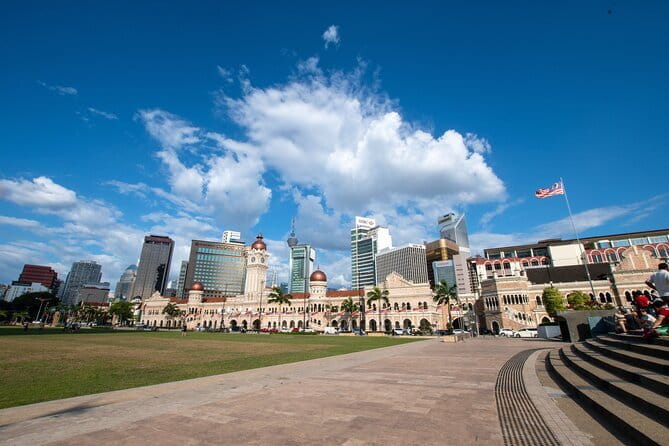
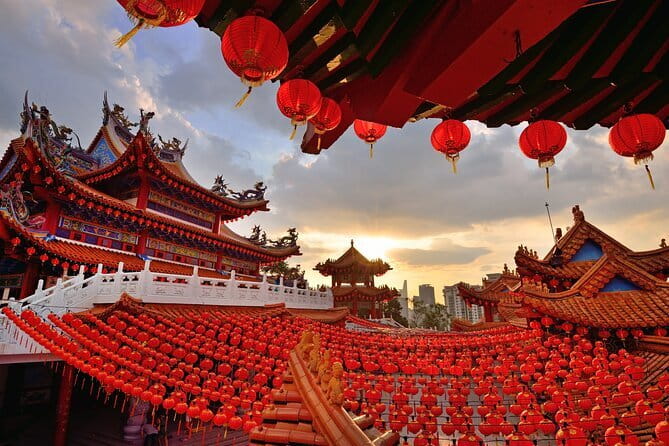
Your first stop is Thean Hou Temple, perched on Robson Hill. It’s described as a six-tiered sanctuary blending Buddhist, Taoist, and Confucian elements. The visual payoff is in the details: intricate carvings and dragon-adorned columns, plus panoramic views from the hill.
This is a smart opener for two reasons. One, you get a clear sense of KL’s religious blend early. Two, you’re still fresh—later in the day, heat and fatigue can make careful looking harder.
After that comes Brickfields, often linked with Little India. The tour frames it as a neighborhood known for Indian shops, restaurants, and cultural attractions, with colorful street scenes. This is where you start picking up the city’s “district feel”—different neighborhoods, different textures, different architecture cues.
If you want photos: aim for at least one wide street shot here, then zoom in on signage or temple-adjacent details. The time is short, so one good panorama beats ten half-looks.
Istana Negara and the National Monument + ASEAN Sculpture Garden
Next you’ll stop at Istana Negara, the official residence of the King of Malaysia (Yang di-Pertuan Agong). It opened in 2011, and the tour description highlights a blend of traditional Malay elements with a modern setting. The visit is short, listed at 10 minutes, so think of it as an exterior orientation stop.
Then you move to Tugu Negara (National Monument), a bronze sculpture commemorating Malaysian soldiers who died fighting for freedom. It’s a solemn site, and even with limited time, you can still slow down for a minute and take in the symbolism.
Right beside it is the ASEAN Sculpture Garden, with six sculptures made by artists from Malaysia, Singapore, Indonesia, Thailand, the Philippines, and Vietnam. The point here isn’t to “study art.” It’s to see how KL gives space to regional identity, not just national landmarks.
Short-stop reality check: if you’re sensitive to rushing through memorials, you’ll want to decide ahead of time what you want from these stops—photos, quick reading of plaques (if available), or a slow moment.

National Mosque and Perdana Botanical Garden: faith meets calm breaks
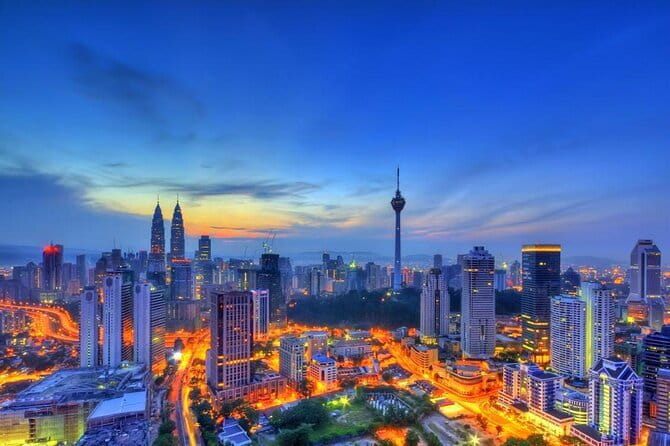
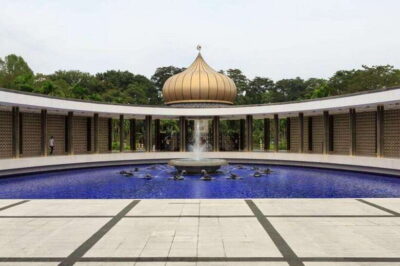
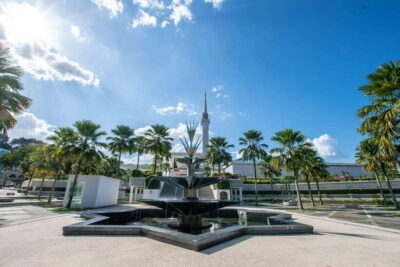
The day includes Masjid Negara (National Mosque), completed in 1965. The description calls the design contemporary and iconic. Expect it to be a strong visual anchor—clean lines, a recognizable silhouette, and a setting that makes you pause even if you’re moving quickly.
Then you’ll have Perdana Botanical Garden, identified as Kuala Lumpur’s oldest and established in 1888. It’s listed as covering over 91 hectares and includes themed gardens. Even if your time there is limited, this is a useful reset in the middle of a heavy landmark schedule.
How to use this pairing well: before you reach the mosque, think of it as “details and symmetry.” After the botanical garden, switch your pace. Even a short garden stop works better when you put your phone away for a moment and let your eyes rest.
Batu Caves: the big-ticket stop with strict rules

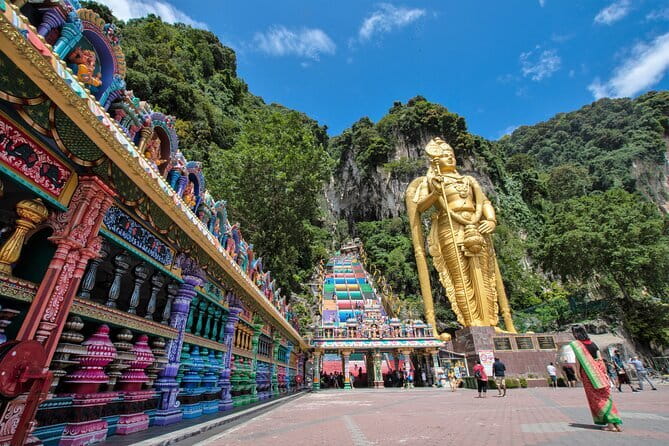
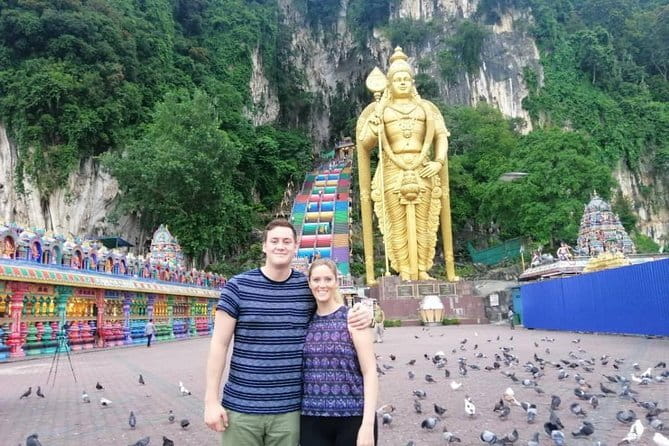
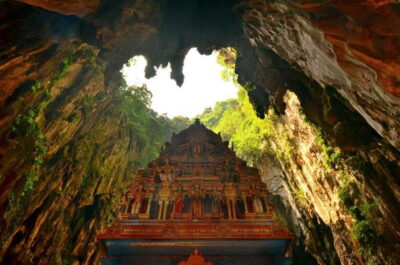
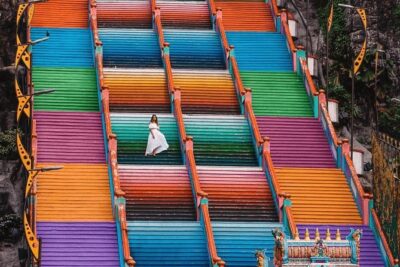
Batu Caves is one of the most famous Kuala Lumpur landmarks on the list: a limestone hill with cave temples north of the city. It’s known for the large golden statue of Lord Murugan at the entrance.
Time is listed at 15 minutes, admission is free, and that’s exactly the kind of stop where expectations matter. You’re not going to “wander forever” in that window. You’ll likely want to do one main loop, get the classic entry photos, and then decide if you want to continue up toward the caves depending on how your legs feel.
The tour’s dress and safety rules are very specific, and you should follow them closely:
- Sleeveless shirts and open-toed shoes are not permitted when visiting Batu Caves.
- The terrain can be steep and slippery, so wear proper shoes.
- Sunscreen and a cap/hat are advised.
Also note the general guideline for women: long dresses or pants with shoulders covered, and avoid sleeveless tops at religious sites. If you’re not traveling prepared, bring a lightweight scarf or layer.
Kuala Lumpur Sentral, Dataran Merdeka, and the River of Life: the city’s “then and now”
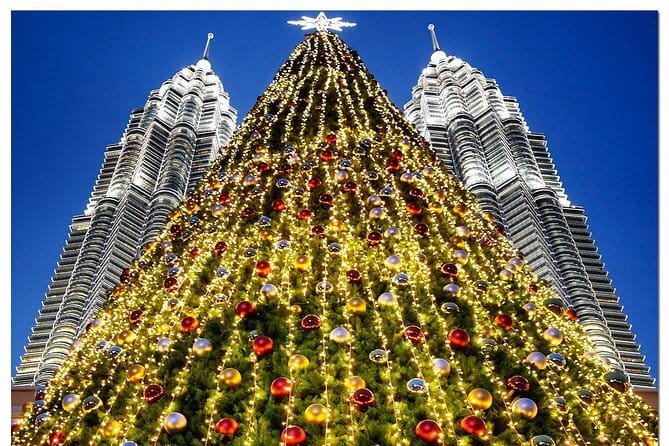
Next you’ll hit Kuala Lumpur Sentral Railway Station, built in 1910. The description calls out colonial architecture with Moorish-inspired design—arched windows, spires, and minarets. Even if you only have a short look (10 minutes), it’s one of those places that makes KL feel layered rather than purely modern.
Then comes Dataran Merdeka (Independence Square). Malaysia’s independence declaration is listed as August 31, 1957, and the square is surrounded by colonial-era buildings. This is one of the most direct “nation story” stops in the day.
After that, you’ll visit The River Confluence, where the Klang and Gombak rivers meet. The tour frames this as the historical heart and birthplace of Kuala Lumpur, with the citation that the settlement began there.
A useful way to experience these three in sequence: treat KL Sentral as the colonial-era “how the city connects,” Dataran Merdeka as “how the city celebrates independence,” and the river confluence as “how the city started.” Even with tight timing, that lens helps you make sense of why these stops belong together.
Merdeka 118, KL Tower, and Petronas Twin Towers: three skyline moments, different moods
This is where the tour leans into the headline attractions.
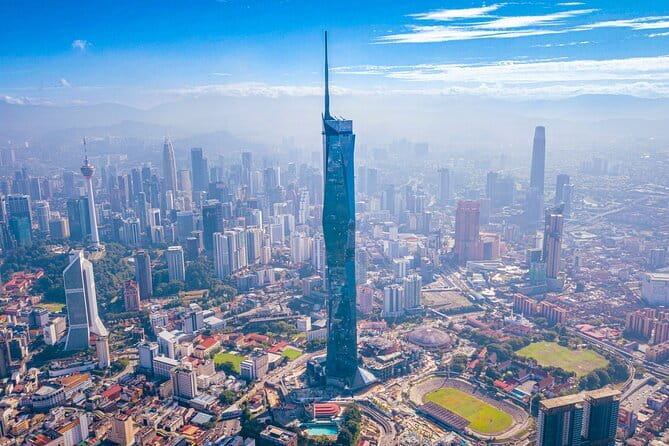
First is Warisan Merdeka Tower, part of Merdeka 118. It’s listed as the tallest building in Southeast Asia and the second-tallest in the world, at 678.9 meters, with a design inspired by Malaysia’s heritage and independence. The stop is only 3 minutes, and the observation deck ticket is noted as not included.
So treat this as a quick exterior/photo-and-spotting stop unless you’ve planned separately for the deck.
Next, Menara Kuala Lumpur (KL Tower). The tour lists it at 421 meters and positions it as a major telecommunications and observation tower. Your time here is 30 minutes and admission is listed free. This is a longer “views and photos” window than the tower-adjacent stops earlier.
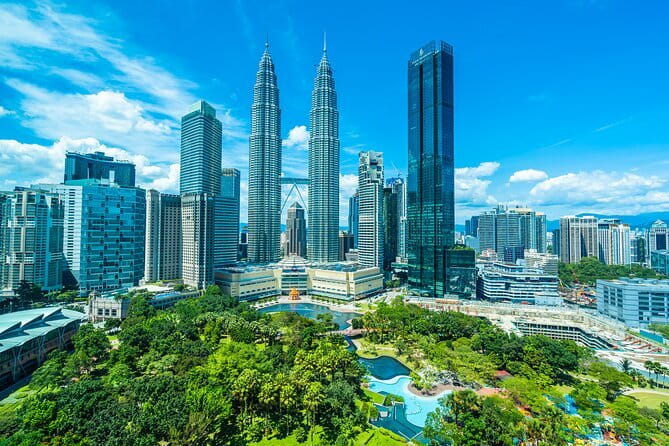
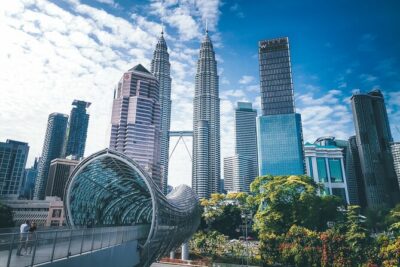
Finally, Petronas Twin Towers. The tour calls them iconic and notes they were the tallest buildings in the world from 1998 to 2004, at 451.9 meters. They’re connected by a sky bridge (as described).
Timing matters: 20 minutes at the Twin Towers is enough for the classic photos from the main areas, but not enough for anything that requires long lines or extra climbs beyond what’s already planned. If you care most about the sky bridge experience, this tour may not be the best match because your time at the towers is fixed.
Chinatown, Central Market KL, Guan Di Temple, and Jamek Mosque: older KL in layers
After the skyline focus, the schedule returns to heritage.
Chinatown is included as a neighborhood stop centered on Petaling Street Market, described as having lots of stalls with local handicrafts and goods. The time listed is 15 minutes, so think of it as orientation plus browsing for a few memorable items rather than a full shopping trip.
Then you’ll visit Central Market Kuala Lumpur, established in 1888. It used to be a wet market and is now an arts and crafts center, with Malaysian handicrafts highlighted by the tour description.
Next is Guan Di Temple (Kwong Siew Association Temple), dedicated to Guan Di, the Chinese god of War and Literature. Built in the late 19th century by early Chinese settlers, it’s a heritage stop that adds a different kind of spirituality than the mosques and Hindu temple earlier.
A quick stop then: Jamek Mosque / Masjid Jamek Sultan Abdul Samad, described as the oldest mosque in Kuala Lumpur, with a scenic lookout point at the confluence of the rivers. This stop is listed at 5 minutes, so keep it simple: one good angle, one quiet look, and move along.
If you’re the type who loves details, you’ll want to focus on one theme per place: symbols on temple gates, the look of rooflines, or the way the site frames the river views.
Jadi Batek Gallery and Beryl’s Chocolate Kingdom: cultural skills and sweet rewards
Two of the stops feel designed for hands-on curiosity.
At Jadi Batek Gallery, the tour description focuses on traditional hand-painted batik, a centuries-old craft. You can observe skilled artisans working, which turns the visit from passive viewing into something more active—watching how patterns and colors come together.
Then there’s Beryl’s Chocolate Kingdom, where the tour description highlights chocolate and the chance to watch chocolate-making. Your time here is 20 minutes, admission listed as free.
This pair is smart within the day’s structure. The garden and temple stops are more about architecture and atmosphere. These two are about skill and production—good for breaking up the emotional weight of monuments and religious sites.
Practical note: if you have dietary restrictions, it’s worth planning your snacks carefully here since it’s built around food.
Sri Maha Mariamman Temple, KL Tower, and the Twin Towers: closing with faith and wow-factor views
Near the end you’ll visit Sri Maha Mariamman Temple, described as the oldest Hindu temple in Kuala Lumpur, dating to 1873. It’s dedicated to the goddess Mariamman, and the tour highlights vibrant, intricate Dravidia-style details.
After that you’ll move back into skyline mode with Menara Kuala Lumpur (KL Tower) for 30 minutes, then end with the Petronas Twin Towers for 20 minutes.
I like this order because it ends strong. Temples can be visually intense and mentally grounding. Then KL Tower and Petronas give you the broad “this is a big modern city” perspective before you’re done.
Who should book this private KL tour?
This one makes sense if:
- You’re in Kuala Lumpur for a limited time and want a fast, first-look orientation.
- You like a day that mixes cultures—temples, mosques, heritage architecture, and skyline icons.
- You prefer value where many stops are listed with free admission.
It may not fit if:
- You hate short stop times and want long, unhurried museum-style visits.
- You don’t want to deal with steps and uneven ground at Batu Caves.
- You’re dreaming mainly of observation decks or experiences that need extra time beyond quick stops.
If you’re comfortable moving briskly and you’re happy to return later to the places that catch your eye, this tour can give you a lot for your day and your budget.
FAQ
How long is the Kuala Lumpur City Tour with 21 Attraction (Private)?
It runs for about 8 hours.
What time does the tour start?
The start time is 8:30 am.
Is hotel pickup included?
Yes, pickup is offered, and the tour includes an air-conditioned vehicle.
Are tickets to the attractions included?
Most stops list admission tickets as free. The Warisan Merdeka Tower observation deck ticket is not included.
What should I wear for Batu Caves?
Sleeveless shirts and open-toed shoes are not permitted at Batu Caves. The tour also advises proper shoes because terrain can be steep and slippery.
Is this a private tour?
Yes. It’s a private tour/activity, and only your group participates.
Is free cancellation available?
Yes. You can cancel for a full refund up to 24 hours in advance of the experience start time.
Is there a minimum number of adults required?
Yes. A minimum of two adults is required for this booking.
Filed Under Kuala Lumpur
- Kuala Lumpur: Batu Caves Half-Day Tour with Pick-Up Option
★ 4.5 · 4,288 reviews - Private Half-Day Batu Caves and Cutural Tour in Kuala Lumpur
★ 5.0 · 3,107 reviews - Sambal Streets Kuala Lumpur Food Tour with 15+ Tastings
★ 5.0 · 2,438 reviews - Historical Malacca Guided Day Tour (Shared Tour)
★ 5.0 · 2,172 reviews
The Grand Sweep of KL
- Kuala Lumpur: Ronda Hop-On Hop-Off City Sightseeing Bus Pass
★ 3.7 · 833 reviews - Kuala Lumpur: Half-Day City Tour
★ 4.4 · 769 reviews - Kuala Lumpur: City Tour & Batu Caves Combo
★ 4.4 · 722 reviews - The Best of Kuala Lumpur Classic
★ 5.0 · 675 reviews
Fresh Reviews from the Klang Valley
- Kuala Lumpur by Night: Food, Culture & City Lights Tour”
★ 4.5 · 3 reviews - Kuala Lumpur Customizable Tour
★ 5.0 · 3 reviews - National Zoo with Giant Panda
★ 3.5 · 3 reviews - Kuala Lumpur City to Kuala Lumpur International Airport Transfer
★ 5.0 · 3 reviews - Private Magical View With Petronas Tower & Cultural Dinner
★ 4.2 · 3 reviews
Kuala Lumpur Sightseeing Tours, compared.
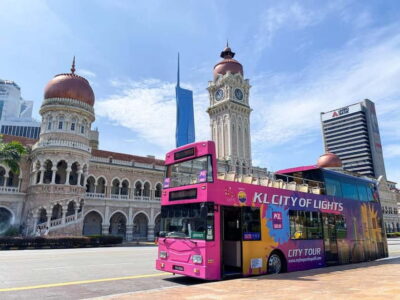 ★ 3.7Ronda Hop-On Hop-Off City Sightseeing Bus PassFrom $10833 reviews
 ★ 4.4Half-Day City TourFrom $12769 reviews
 ★ 4.4City Tour & Batu Caves ComboFrom $15722 reviews
 ★ 5.0The Best of Kuala Lumpur ClassicFrom $65675 reviews
 ★ 4.6Full-Day Private City Highlights TourFrom $50589 reviews
 ★ 4.5Kuala Lumpur City Tour Full Day 8 hoursFrom $56575 reviews
 ★ 4.6From Kuala Lumpur: City Tour with 21 AttractionsFrom $19512 reviews
 ★ 5.0️ Kuala Lumpur Instagram Tour: Most Famous Spots (Private & All-Inclusive)From $107429 reviews
Browse the lists this tour appears in