
Reviewed · KUALA LUMPUR SIGHTSEEING TOURS
Full-Day Malacca City Tour
Malacca feels like a history book you can actually walk around. This full-day city tour trades paperwork for easy hotel pickup and a route that hits the big Dutch, Portuguese, and British-era landmarks in one long, air-conditioned day. I love that you get English-speaking help handling the logistics, so you spend less time figuring out where to go and more time looking at the details. The main drawback to plan for: this is built around a driver, not a full site-by-site guide, so if you want lots of walking explanations, you’ll need to set that expectation (or choose a guided version).
You’ll cover Red Square sights, A Famosa’s surviving gate, churches on St. Paul’s Hill, the lively Jonker Street corridor, major Chinese and Indian Muslim places of worship, plus the Malacca River and a modern mosque on Malacca Island. I also like the value angle: for $55 per person, you’re paying for transportation round-trip from Kuala Lumpur and a day’s worth of coordinated stops, not just admissions. Just keep in mind the day includes warm, outdoor walking, and the tour is not wheelchair accessible.
In This Review
- Key takeaways before you go
- A full-day Malacca plan that starts with a smooth KL pickup
- Red Square and Stadthuys: where Dutch rule still looks official
- A Famosa and Porta de Santiago: Portuguese walls with just a gate left
- St. Paul’s Hill and Church: an old chapel that outlasted empires
- Jonker Street: colonial-era city life turns into snacks, textiles, and antiques
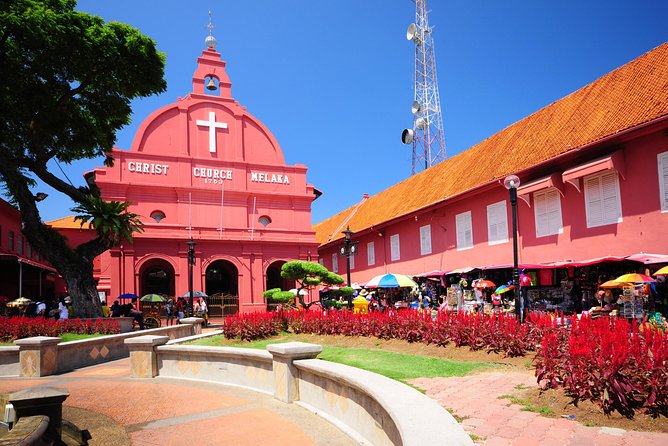
- Christ Church: Protestant roots layered on earlier Catholic space
- Mini Malaysia and ASEAN Cultural Park: a time-saver with a separate ticket
- Cheng Hoon Teng Temple: an old Chinese landmark still working today
- Kampung Kling Mosque: Harmony Street where religions sit close together
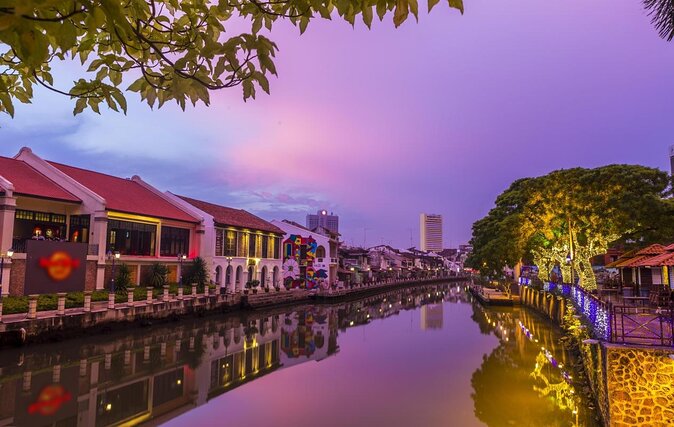
- Malacca River: the trade route that got a modern makeover
- Melaka Straits Mosque: a modern silhouette on a man-made island
- Price and logistics: does $55 feel fair for a full day?
- Who this tour is best for (and what to bring)
- Should you book this Malacca city tour?
- FAQ
- How long is the full-day Malacca city tour?
- Is hotel pickup and drop-off included?
- Is lunch included?
- Are tickets or admissions included for the stops?
- Is this tour private?
- Do I need a guide, or is it driver-only?
- Is the tour wheelchair accessible?
- What’s the cancellation rule?
Key takeaways before you go
- Pickup-and-drop convenience from Kuala Lumpur means you don’t waste the day on transit planning.
- Driver-run routing helps you move efficiently, but don’t expect a full guided lecture at every stop.
- Most major sights are quick and free, while Mini Malaysia has a separate admission ticket.
- A careful mix of cultures shows up in churches, temples, and mosques in a single loop.
- Plan for heat and bring water, because you’ll be outside more than you think.
A full-day Malacca plan that starts with a smooth KL pickup
This tour runs about 7 to 8 hours, starting with pickup from your hotel in Kuala Lumpur and ending back at your hotel. You’ll ride in an air-conditioned vehicle, which matters because Malacca can feel steamy even when the sites are shaded.
The practical win is how the schedule is built for momentum. You’re not spending half your day waiting for buses, arguing with map pins, or trying to figure out which entrance is the right one. The English-speaking driver takes care of the routing and logistics, and that’s especially useful if you want a classic highlights route without turning it into a DIY puzzle.
One thing to watch: the stops include a mix of short photo moments and time to wander. So bring a mindset of quick look, good photos, then on to the next place.
Jonker Street keeps more days like this one
Red Square and Stadthuys: where Dutch rule still looks official
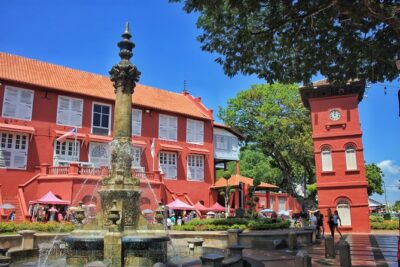
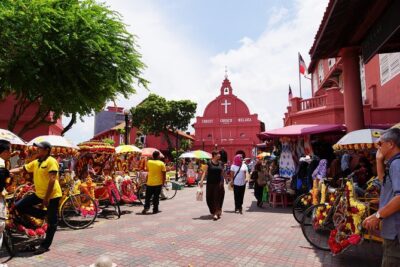
Your first big landmark is Stadthuys, in the heart of Malacca City’s Red Square, near the red clock tower. The building is famous for its red exterior and the sense that you’re standing in the center of government history.
Stadthuys was built by the Dutch in 1650 as offices for the Dutch governor and deputy governor. That Dutch imprint matters because Malacca didn’t stay Portuguese forever. Over time, the city’s power shifted, and you can literally see it in what survived and what got repurposed.
What to do with 15 minutes here:
- Take a moment to look at the building shape and its surroundings, not just the front wall.
- Use it as your orientation point, since so many other sights orbit this area.
Possible drawback: Stadthuys is a classic “see it, understand it, move on” stop. If you want a lot of deep narration, you may feel a bit rushed with only short time on site. Still, it’s a great starting anchor.
A Famosa and Porta de Santiago: Portuguese walls with just a gate left
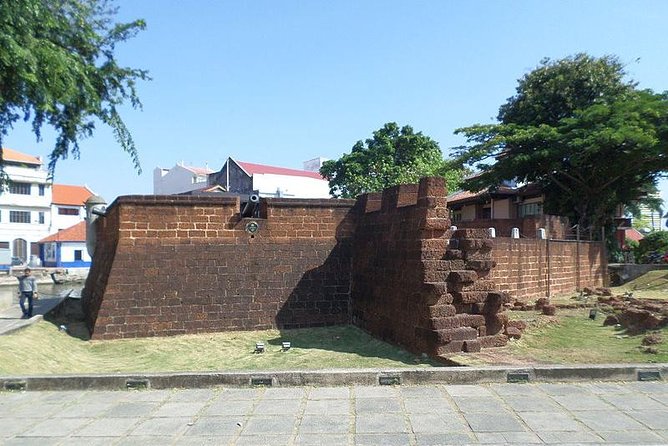
Next up is A Famosa (Kota A Famosa). It was a former Portuguese fortress, and it’s one of the oldest surviving European architectural remains in Southeast Asia and the Far East. Here’s the key detail: only the Porta de Santiago gate house still remains.
This stop is short, but it’s meaningful. You’re seeing the idea of fortification made physical again, even though most of the heavy structure is gone. That’s one reason the remaining gate is such a big deal. It’s not just a ruin. It’s an old entrance that survived when the rest didn’t.
Quick tip: Don’t rush past photos. The gate is small compared to what you might imagine from the word fortress. Step back, then step in, so you get both the context and the close-up details.
St. Paul’s Hill and Church: an old chapel that outlasted empires
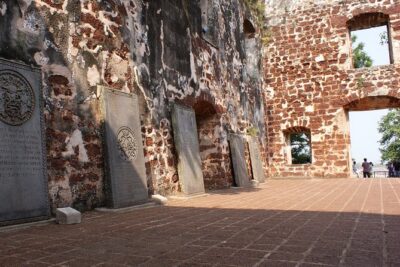
Then you head to St. Paul’s Hill & Church (Bukit St. Paul). The church building is historically important: the original chapel dates to 1521, and it’s often noted as the oldest church building in Malaysia and Southeast Asia.
It began as a simple chapel dedicated to the Virgin Mary, known as Nossa Senhora da Annunciada (Our Lady of the Annunciation). The story connected to its founding includes Portuguese nobleman Duarte Coelho, who built it as gratitude after surviving a storm.
This stop sits inside the broader Malacca Museum Complex area that connects multiple historical sites, including A Famosa and the Stadthuys region. So even though your stop time is brief, you’re in a concentrated cluster of old structures.
What you’ll likely appreciate here: the hill position. Even if you’re not there for religious architecture, being up on the slope changes how you “read” the city layout.
Consideration: With short visit time, you might not get as much in-the-moment context as you want unless your driver is willing to share the basics. If you want more, you can ask questions while you’re on the road.
Jonker Street: colonial-era city life turns into snacks, textiles, and antiques
Then it’s time for Jonker Street, the Chinatown street area around Jalan Hang Jebat (the Jonker Walk). This is where the city’s living side shows up after the monuments.
Jonker Street’s background is fun: during the Dutch period, servants and subordinates of Dutch colonialists lived near Heeren Street. Over time, as the Dutch left, the area became more associated with nobility and wealthy Peranakan communities. Today, it’s a shop-and-stroll corridor with antiques, textiles, crafts, and food.
How to make this stop worth it (30 minutes):
- Pick one small thing to buy, not five. This prevents shopping fatigue.
- If you want food, decide quickly. Food lines can grow while you’re still comparing stalls.
Possible drawback: If you’re the type who hates crowds or strong bargaining energy, go in with a calm plan. The street is popular, and it can feel busy even during the day.
The capital in one sweep, more circuits
Christ Church: Protestant roots layered on earlier Catholic space
Your next major church stop is Christ Church Malacca, an 18th-century Anglican church. It’s known as the oldest functioning Protestant church in Malaysia. It’s also linked to the Dutch conquest of Malacca from the Portuguese in 1641, which led to Roman Catholic churches being converted to Dutch Reformed use.
The church’s history is connected to St. Paul’s old church building on the hill, which was renamed Bovenkerk (Upper Church) for the Dutch community’s main parish purposes.
This is another quick stop, but it’s interesting because it shows how buildings change hands, then keep serving a community even as denominations shift.
Why it’s valuable: You’re not just collecting sights. You’re watching the city rewrite itself, then leave the physical evidence behind.
Mini Malaysia and ASEAN Cultural Park: a time-saver with a separate ticket
One stop you’ll hear mixed opinions about is Mini Malaysia & ASEAN Cultural Park in Ayer Keroh. It’s a theme park built around miniature traditional houses from every Malaysian state and also from every ASEAN country.
Mini Malaysia opened in 1986, and Mini ASEAN Cultural Park opened in 1991. That timeline matters if you care about development and how Malaysia presents its own identity.
Here’s the important practical part: admission to this stop is not included. Your tour likely covers getting you there, but you’ll pay the entry ticket once you arrive.
Should you go? If you want fast context and a low-effort “see the types” overview, it can work well. If you prefer real buildings and neighborhood streets, you might find you’d rather spend the time elsewhere in old Malacca.
Cheng Hoon Teng Temple: an old Chinese landmark still working today
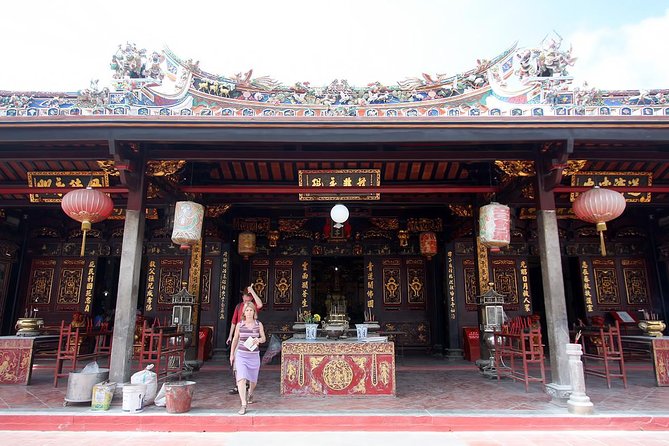
Next is Cheng Hoon Teng Temple (Temple of Green Cloud). This one is special because it’s still active. It practices the Three Doctrinal Systems of Buddhism, Confucianism, and Taoism.
It’s also noted as the oldest functioning temple in Malaysia. The site traces back to Dutch Malacca times: founded in 1645 by a Chinese kapitan named Tay Kie Ki (also Tay Hong Yong), with additional structures built in 1673 under Kapitan Li Wei King (also Koon Chang). Materials were imported from China.
This stop is a quiet contrast to the shopping energy nearby. You’ll get a better sense of Malacca as a trade port city with strong Chinese merchant communities.
Quick tip: Treat it like an in-between stop. Look around, observe how people move and pray, and keep your pace respectful.
Kampung Kling Mosque: Harmony Street where religions sit close together
Then you’ll visit Kampung Kling Mosque, located on Jalan Tukang Emas, also called Harmony Street. This mosque sits near the Sri Poyatha Moorthi Temple and the Cheng Hoon Teng Temple, so you’re seeing the tight geography of religious communities side by side.
The mosque’s story is partly architectural survival. The original structure was built by Indian Muslim traders in 1748 as a wooden building, then rebuilt in brick in 1872. The design blends Sumatran, Chinese, Hindu, and Malacca Malay influences.
It’s also described as retaining traditional elements like the minaret, ablution pool, and entrance arch.
Why this stop works on a highlights day: It’s one thing to see one religious building. Seeing multiple faith landmarks near each other on the same route makes the city feel more real and less like a museum map.
Malacca River: the trade route that got a modern makeover
Your next stretch is the Malacca River, or Sungai Melaka. Historically, it was a vital trade route during the heyday of the Malacca Sultanate in the 15th century.
What makes this stop more than a view is that the river has had major revitalization. A reported USD $100 million infrastructure project focused on rejuvenation, including a tidal barrage, building restoration, dredging, and river walkways, plus concrete riverbanks and changes near the river mouth.
So you’re seeing old-purpose water plus modern city engineering working together.
How to enjoy it fast (15 minutes):
- Step to a spot where you can see the river line, not just the nearest edge.
- Think of it as the city’s old highway.
Melaka Straits Mosque: a modern silhouette on a man-made island
Finally, you’ll reach Melaka Straits Mosque (Masjid Selat Melaka) on Malacca Island. It opened on 24 November 2006, with the Supreme Ruler of Malaysia at the ceremony.
The mosque is built using a mix of Middle Eastern and Malay craftsmanship, and it’s known for looking like it’s floating when the water level is high.
This end-stop gives you a change in mood: less colonial masonry, more modern architecture anchored to water.
Consideration: It’s another short stop. If you love photography, show up with a calm plan for angles and keep your expectations realistic about time.
Price and logistics: does $55 feel fair for a full day?
At $55 per person, this tour’s value mostly comes from transportation and coordination. From Kuala Lumpur, that drive alone is a chunk of the day. Here you get a comfortable air-conditioned vehicle, plus hotel pickup and drop-off.
You’re also paying for an English-speaking professional driver who handles logistics. That’s a big deal when you’re trying to hit multiple sites without turning the day into a transport scavenger hunt.
Where value can change for you is how you define a guided experience. Some people want a driver who just drives. Some want a guide who talks at every stop. This product is built around the driver-and-routing style, not a full narrated walking tour.
If you want a lot of explanation: ask before booking whether you’ll have a true guide for commentary at each location, not only an English-speaking driver.
If you’re okay with stop-and-look time: this price can feel like a solid deal.
Also note the meal situation is a bit unclear based on the tour details you may receive. The overview mentions an included set lunch, while one note says meals are not included. In practice, treat lunch as something you need to confirm at booking time, then plan a backup snack.
Who this tour is best for (and what to bring)
This works well for:
- People who want a classic Malacca highlights loop without figuring out transit.
- Families and groups who need all ages-friendly pacing, with short stops and a smooth ride.
- Anyone who likes history that shows up in everyday spaces—churches, temples, and mosques within one city.
What to bring:
- Comfortable shoes. Even with short stops, you’ll be outside.
- Sunscreen and water. Heat is real on a city route.
- A charging plan. You’ll want photos and maps.
One more practical note: the tour is not wheelchair accessible, so if anyone in your group needs step-free access, you’ll need to choose a different format.
Should you book this Malacca city tour?
Book it if you want a straightforward day trip that covers the major landmarks in Malacca with pickup convenience and an English-speaking driver handling the moving parts. It’s also a good choice if you’re the type who enjoys short stops, good photos, and moving on to the next contrast—Dutch forts, Portuguese-era church roots, Peranakan street culture, and modern water architecture.
Skip or reconsider if you’re expecting a full guided lecture at every site or a long, in-depth walk with lots of explanations. For that, you’ll likely want a product that explicitly includes a guide, not just a driver.
FAQ
How long is the full-day Malacca city tour?
It runs about 7 to 8 hours.
Is hotel pickup and drop-off included?
Yes. Pickup from your Kuala Lumpur hotel and return drop-off are included.
Is lunch included?
The tour overview mentions an included set lunch, but another note says meals are not included. Confirm the meal inclusion on your specific booking before you go.
Are tickets or admissions included for the stops?
Many listed stops note admission as free, but Mini Malaysia & ASEAN Cultural Park is listed as having admission not included.
Is this tour private?
Yes. It’s described as private, meaning only your group participates.
Do I need a guide, or is it driver-only?
The tour includes an English-speaking driver handling logistics. If you want a guided, commentary-focused experience at each stop, you may need to choose a different guided tour option.
Is the tour wheelchair accessible?
No, it’s listed as not wheelchair accessible.
What’s the cancellation rule?
Free cancellation is available up to 24 hours before the experience start time for a full refund. Canceling less than 24 hours before start time isn’t refunded.
Filed Under Kuala Lumpur
- Kuala Lumpur: Batu Caves Half-Day Tour with Pick-Up Option
★ 4.5 · 4,288 reviews - Private Half-Day Batu Caves and Cutural Tour in Kuala Lumpur
★ 5.0 · 3,107 reviews - Sambal Streets Kuala Lumpur Food Tour with 15+ Tastings
★ 5.0 · 2,438 reviews - Historical Malacca Guided Day Tour (Shared Tour)
★ 5.0 · 2,172 reviews
The Grand Sweep of KL
- Kuala Lumpur: Ronda Hop-On Hop-Off City Sightseeing Bus Pass
★ 3.7 · 833 reviews - Kuala Lumpur: Half-Day City Tour
★ 4.4 · 769 reviews - Kuala Lumpur: City Tour & Batu Caves Combo
★ 4.4 · 722 reviews - The Best of Kuala Lumpur Classic
★ 5.0 · 675 reviews
Melaka, Door to Door
- Historical Malacca Guided Day Tour (Shared Tour)
★ 5.0 · 2,172 reviews - Historical Malacca Day Tour from Kuala Lumpur (Private Tour)
★ 5.0 · 515 reviews - Historical Malacca Tour with Lunch from Kuala Lumpur
★ 3.5 · 317 reviews - Kuala Lumpur: Malacca Day Trip with River Cruise and Lunch
★ 4.6 · 312 reviews
Fresh Reviews from the Klang Valley
- Kuala Lumpur by Night: Food, Culture & City Lights Tour”
★ 4.5 · 3 reviews - Kuala Lumpur Customizable Tour
★ 5.0 · 3 reviews - National Zoo with Giant Panda
★ 3.5 · 3 reviews - Kuala Lumpur City to Kuala Lumpur International Airport Transfer
★ 5.0 · 3 reviews - Private Magical View With Petronas Tower & Cultural Dinner
★ 4.2 · 3 reviews
Kuala Lumpur Sightseeing Tours, compared.
 ★ 3.7Ronda Hop-On Hop-Off City Sightseeing Bus PassFrom $10833 reviews
 ★ 4.4Half-Day City TourFrom $12769 reviews
 ★ 4.4City Tour & Batu Caves ComboFrom $15722 reviews
 ★ 5.0The Best of Kuala Lumpur ClassicFrom $65675 reviews
 ★ 4.6Full-Day Private City Highlights TourFrom $50589 reviews
 ★ 4.5Kuala Lumpur City Tour Full Day 8 hoursFrom $56575 reviews
 ★ 4.6From Kuala Lumpur: City Tour with 21 AttractionsFrom $19512 reviews
 ★ 5.0️ Kuala Lumpur Instagram Tour: Most Famous Spots (Private & All-Inclusive)From $107429 reviews
Browse the lists this tour appears in