
Reviewed · MELAKA DAY TOURS FROM KL
Historical Malacca Tour with Lunch from Kuala Lumpur
Malacca makes a strong case for the phrase small place, big stories. I love the climb to St. Paul’s Hill for those over-the-water views, and I also like that you get a proper Nyonya lunch during the day. It’s a focused, guided way to connect Portuguese, Dutch, Chinese, and local life in one stop-and-go schedule.
One thing to weigh: this is a long day with a lot of time on the bus and in crowds, so you’ll want comfortable shoes and patience if the pacing feels fast.
In This Review
- Key things I like about this Malacca day trip
- A long day made easier: pickup, coach ride, and pacing
- Red Square and Stadthuys: Dutch Malacca in crimson
- St. Paul’s Hill: the ruins, the views, and the stairs reality
- A Famosa Fort: Porta de Santiago and the survival story
- Jonker Street: antiques, bargaining, and the “slow down” moments
- Cheng Hoon Teng Temple: a living 1673 landmark
- Lunch on the tour: included, Nyonya-style, and worth planning for
- What $127 buys: value from pickup, guide, lunch, and included fees
- Timing, toilets, and the stuff nobody puts on a brochure
- Is this the right fit for you?
- Should you book this Malacca day trip?
Key things I like about this Malacca day trip
- Hotel pickup and drop-off from Kuala Lumpur, so you’re not fighting transport
- UNESCO-area highlights like the Dutch Red Square and St. Paul’s Hill ruins
- Panoramic views from St. Paul’s Hill, the kind you can’t really fake
- Jonker Street time to browse antique lanes and shop-and-stroll Chinatown
- A multi-faith Chinese temple stop at Cheng Hoon Teng (a working temple built in 1673)
- Lunch included, with portions commonly described as generous
A long day made easier: pickup, coach ride, and pacing
This is a full-day Malacca City outing that starts with hotel pickup around 8:30am. You’ll head south by air-conditioned motorcoach, which matters because Malacca can be hot and the walking days don’t pause for comfort.
What you gain from the group format is time efficiency. You’ll get a guided circuit of major sights without having to map out routes, negotiate taxi math, or wait around for tickets. What you trade is freedom. Your day is set by the group pace, and several parts of central Malacca are shared with tour groups, so there’s a lot of “move along, then stop for photos.”
If you’re the type who wants lingering time in museums or slow browsing in Jonker Street, I’d treat this as a “hit the top notes” day. People who truly fall in love with Malacca often do it by staying overnight, because the town is better experienced with an afternoon and evening on your own.
Jonker Street keeps more days like this one
Red Square and Stadthuys: Dutch Malacca in crimson
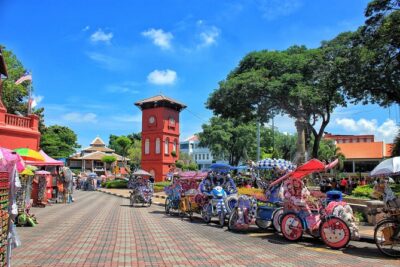
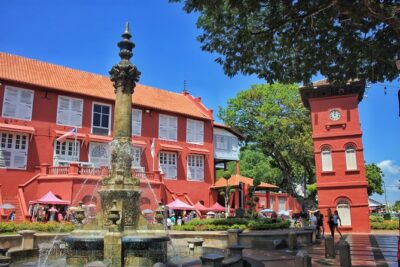
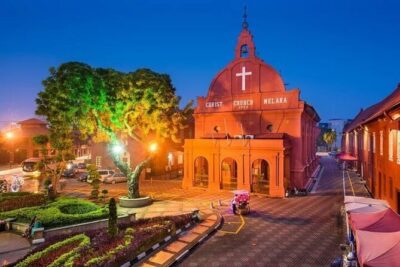
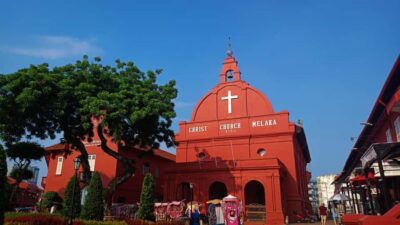
The morning begins in the heart of the UNESCO heritage zone at Red Square (also called Dutch Square). The standout here is the setting: elegant buildings around a focal square painted in a deep red tone. It’s the kind of place where you quickly get oriented, because you can see how the colonial-era town layout shaped the center.
This first stop is short, but it’s useful. If you’ve ever visited a historical city and felt like you arrived mid-story, Red Square helps you reset. It’s not just a photo moment—it gives you the “then and there” context before the Portuguese and Chinese layers start stacking up.
Practical tip: since the tour is organized and timed, use this early window to grab water and get your bearings. A later scramble for basics is harder when the schedule tightens.
St. Paul’s Hill: the ruins, the views, and the stairs reality
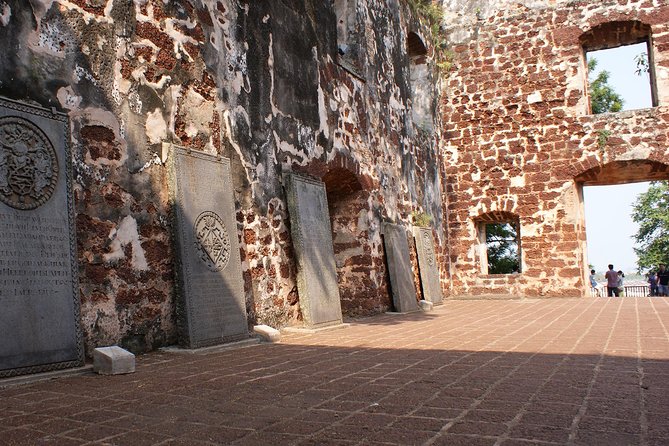
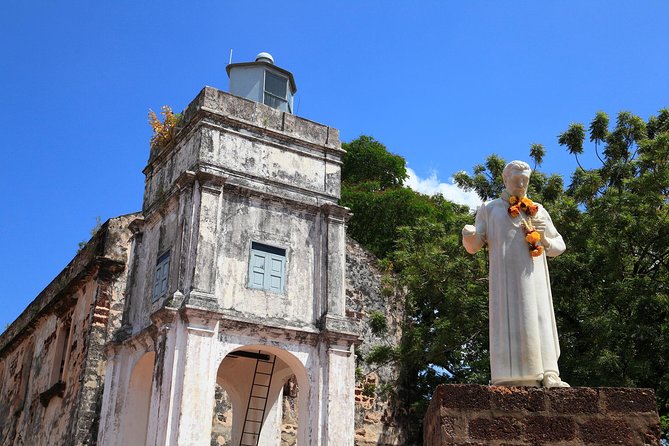
The heart of the tour’s atmosphere is St. Paul’s Hill. The walk up is steep enough that you’ll feel it, even if you’re in decent shape. At the top are the ruins tied to St. Paul’s Church, built originally by Portuguese forces in the early 1500s, with layers of later history around the site.
From here, you get what makes the day feel worth it: panoramic sightlines over Malacca Strait and the broader Bandar Hilir area. It’s one of those views that quickly makes the centuries feel tangible, because you’re seeing the geography that made Malacca important as a port.
Two practical notes that are worth your attention:
- Bring water and go steady. A steep climb plus humid air can drain you faster than you expect.
- If you’re traveling with someone who struggles with stairs, you may need a workaround. One party reported that a tri-cycle option was suggested for an older guest (with an additional cost). If you think you’ll need something like that, ask early so the plan isn’t improvised on the spot.
A Famosa Fort: Porta de Santiago and the survival story
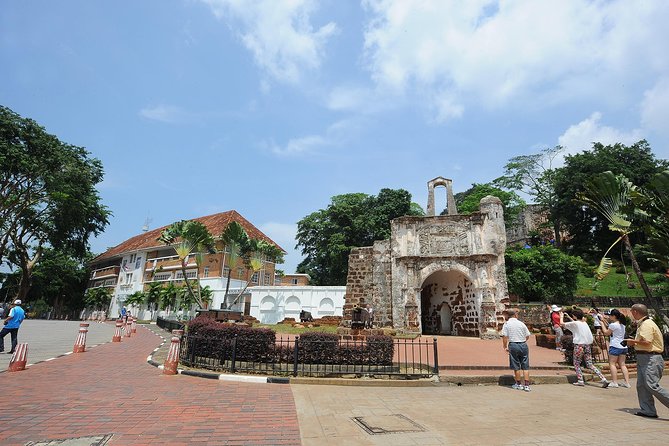
Next comes A Famosa, one of the oldest surviving European architectural remains in Southeast Asia. The tour builds a strong narrative here: the fort traces back to Portuguese control around 1511, followed by British-era changes in 1641, and then later damage in 1806 to keep it from being used as leverage during conflicts.
Before you head up to the ruin on St. Paul’s Hill, there’s a photo pause at Porta de Santiago. It’s a quick moment, but it helps connect the Portuguese imprint you’ve already started to sense with the fort’s remaining structure.
What I appreciate about this part of the circuit is that it isn’t just “look at the old stones.” The story of what survived—and what didn’t—explains the port’s long conflict history without turning it into homework. You’ll likely leave with a clearer idea of why Malacca has so many architectural fingerprints.
Jonker Street: antiques, bargaining, and the “slow down” moments
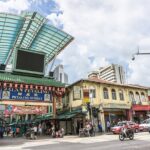
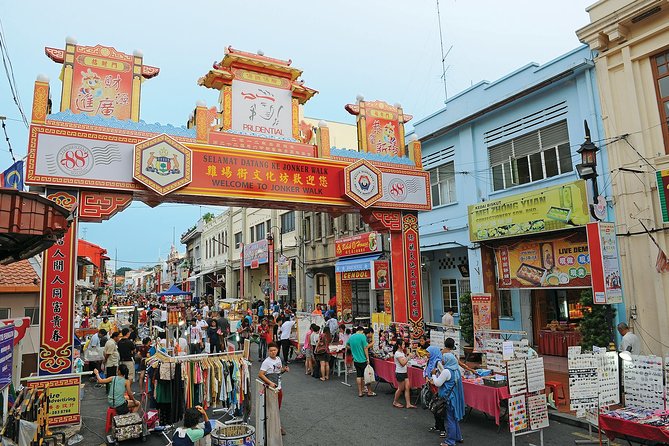
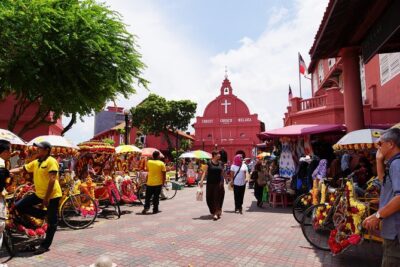
After the hilltop history, you drop into the energy of Jonker Street, the Chinatown center known worldwide for antique browsing and bargaining. Even if you’re not an antiques person, this stop is valuable because Jonker Street shows you daily life in the old quarter—shops, craft stalls, snack breaks, and that constant flow of people.
This is also where crowd management becomes real. The area is shared with tour groups, so it can feel busy. Use the time as a browse window, not a mission to win every deal. If you spot something you like, buy it during your allotted stop rather than assuming there’ll be another chance later.
If you’re picky about your timing, keep this in mind: some day trips can feel rushed in the old area depending on how the group moves after lunch. Your best move is to keep your money and shopping bag ready, so you’re not digging for items while everyone streams toward the next stop.
Further back into Malayan history
Cheng Hoon Teng Temple: a living 1673 landmark
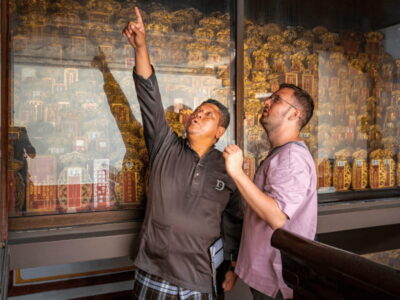
One of the most interesting cultural stops is Cheng Hoon Teng Temple, described as Malaysia’s oldest still-operating Chinese temple, built in 1673. This isn’t a “closed for business museum.” It’s a working place of worship, so it has the texture of something used, not just staged.
The temple practices traditions associated with Taoism, Confucianism, and Buddhism. Even though the temple is dedicated to Kuan Yin (goddess of mercy), it’s presented as multi-faith in character, with different belief traditions visible through the space.
A couple of practical reminders:
- Dress matters if you’re visiting religious interiors. One common piece of advice that came up for church-related stops is to avoid shorts, singlets, and beachy clothing. If you’ll pass through any religious sites, pack a cover-up layer or bring something more appropriate.
- Expect that not every religious site element will be accessible at all times. If the group is moving quickly, you might not see every corner you hoped for.
Lunch on the tour: included, Nyonya-style, and worth planning for
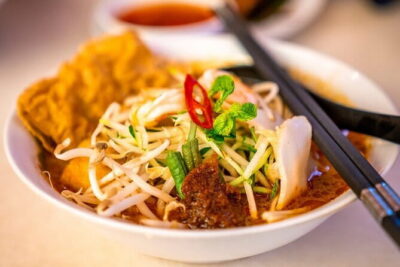
Lunch is included and is typically described as traditional Nyonya food. There’s a theme in feedback that portions can be generous, and many people feel the restaurant meal quality is solid.
Still, not every lunch experience lands the same way. Some reports describe the meal as fairly generic (sweet-and-sour style), or mention upset stomach issues tied to what was served and how the options were handled. That doesn’t mean the lunch will be bad for you—but it does mean you should treat this meal as a “standard package lunch,” not a custom food adventure.
If you have preferences or sensitivities, I’d do two things:
- Go in expecting a group-style menu, not a choose-your-own feast.
- If you want to steer toward something more local, ask the guide or driver for suggestions during the day. There’s been specific advice in reports that the driver can offer helpful direction.
What $127 buys: value from pickup, guide, lunch, and included fees
At $127 per person, this is priced like a proper guided day trip, not a bare-bones bus rental. What supports the value is that you’re not paying separately for the key “day-trip headaches”:
- Hotel pickup and drop-off
- English-speaking guide
- Lunch
- Entrance fees that are needed for the included stops
In other words, you’re paying for logistics and interpretation. If you were to line up the same highlights on your own, you’d spend time on transport and ticket planning, and you’d probably pay for at least some entrances and a guide-like service.
Group size is also capped at 15 people, which can help your day feel less like cattle. That said, crowd levels in the old quarter can still push you into “photo and move” mode.
Timing, toilets, and the stuff nobody puts on a brochure
A lot of the day-trip experience comes down to small practicalities. Here are the things I’d personally plan around:
- The drive takes time. Even with a comfortable coach, the round-trip will be most of your day. The trade is that you see major sites without needing extra planning.
- Crowds can make stops feel shorter. Central Malacca is popular, and some areas can be packed with other groups. If you hate crowds, you’ll feel it most around the Dutch core and Jonker Street.
- Restroom stops vary. One report flagged a first toilet stop as unusually dirty. I’d treat this as a reminder to keep a little backup in your day bag (wet wipes and hand sanitizer can save your mood).
- Meeting and regrouping matters. In busy areas, you can accidentally wander away. If the guide gives you directions, repeat the key landmark back to yourself so you’re ready when it’s time to regroup.
Also, guides make a big difference. Named guides in feedback include Ben, David, Simon, and Heme, with repeated praise for being informative and entertaining. Still, not every guide experience is perfectly smooth—one note mentioned that English clarity can vary. If you care a lot about narration, this is where the right guide really matters.
Is this the right fit for you?
This Malacca tour works best if you:
- Want a guided overview of Portuguese-era sites, Dutch Square, Jonker Street, and a major Chinese temple
- Have only one day in the area and don’t want to coordinate transport
- Like structured itineraries where the hard parts (timing, tickets, and meeting points) are handled for you
- Prefer a small-group feel (up to 15 people)
It might disappoint you if you:
- Want lots of free time to wander without regrouping
- Expect a relaxed, slow pace with deep museum time
- Are highly picky about lunch style or have strict dietary needs
- Are sensitive to crowds and want the quiet Malacca experience
Should you book this Malacca day trip?
If you’re aiming to see Malacca’s top landmarks without turning your day into a DIY logistics project, I think this is a good value choice. The best parts—the hilltop views, the Portuguese-Dutch-Chinese story arc, and the focused time in Jonker Street—fit the “one-day sampler” goal.
My main advice: go in with the right mindset. This is a packed day. Wear shoes you can walk in on stairs, dress for any religious interiors you might enter, and keep your energy for the sights that truly matter. If Malacca is your main reason for being in Malaysia, consider adding one night too, so you can experience the city after the tour buses leave.
Old Malaya, Revisited
- Historical Malacca Guided Day Tour (Shared Tour)
★ 5.0 · 2,172 reviews - Kuala Lumpur: Batu Caves & Historic Buildings Tour
★ 4.7 · 539 reviews - Historical Malacca Day Tour from Kuala Lumpur (Private Tour)
★ 5.0 · 515 reviews - From Kuala Lumpur: Private Batu Caves Cultural Tour
★ 4.4 · 410 reviews
Filed Under Kuala Lumpur
- Kuala Lumpur: Batu Caves Half-Day Tour with Pick-Up Option
★ 4.5 · 4,288 reviews - Private Half-Day Batu Caves and Cutural Tour in Kuala Lumpur
★ 5.0 · 3,107 reviews - Sambal Streets Kuala Lumpur Food Tour with 15+ Tastings
★ 5.0 · 2,438 reviews - Historical Malacca Guided Day Tour (Shared Tour)
★ 5.0 · 2,172 reviews
Melaka, Door to Door
- Historical Malacca Guided Day Tour (Shared Tour)
★ 5.0 · 2,172 reviews - Historical Malacca Day Tour from Kuala Lumpur (Private Tour)
★ 5.0 · 515 reviews - Kuala Lumpur: Malacca Day Trip with River Cruise and Lunch
★ 4.6 · 312 reviews - Malacca Historical Private Tour With Personal Chauffeur
★ 4.5 · 151 reviews
Fresh Reviews from the Klang Valley
- Kuala Lumpur by Night: Food, Culture & City Lights Tour”
★ 4.5 · 3 reviews - Kuala Lumpur Customizable Tour
★ 5.0 · 3 reviews - National Zoo with Giant Panda
★ 3.5 · 3 reviews - Kuala Lumpur City to Kuala Lumpur International Airport Transfer
★ 5.0 · 3 reviews - Private Magical View With Petronas Tower & Cultural Dinner
★ 4.2 · 3 reviews
Melaka Day Tours from KL, compared.
 ★ 5.0Historical Malacca Guided Day Tour (Shared Tour)From $322,172 reviews
 ★ 5.0Historical Malacca Day Tour from Kuala Lumpur (Private Tour)From $87515 reviews
 ★ 4.6Malacca Day Trip with River Cruise and LunchFrom $78312 reviews
 ★ 4.5Malacca Historical Private Tour With Personal ChauffeurFrom $95151 reviews
 ★ 4.0Malacca Sunset Tour: UNESCO Heritage Highlights & River CruiseFrom $102108 reviews
 ★ 4.5From Kuala Lumpur: Private Full Day Tour to MalaccaFrom $8894 reviews
 ★ 5.0Malacca Instagram Tour: Most Famous Spots (Private & All-Inclusive)From $18437 reviews
 ★ 4.5Kuala Lumpur Malacca River Cruise and Historical Tour with LunchFrom $8536 reviews
Browse the lists this tour appears in