
Reviewed · MELAKA DAY TOURS FROM KL
Historical Malacca Day Trip from Kuala Lumpur
Malacca makes Kuala Lumpur feel like a shortcut. In one 8-hour coach trip, you’ll see major UNESCO-era landmarks: Portuguese and Dutch church ruins, the oldest Chinese temple in Malaysia, and the Portuguese-influenced Mini Lisbon area, all tied together with real stories, not just stop-and-snap pics.
Two things I really like: the included lunch (so you’re not scrambling between sights), and the way the route mixes faiths and empires in a tight loop—Buddhist, Catholic, Anglican, and Portuguese heritage show up in different corners of the city. The only real catch is time: this is a group day with limited wandering, and bad weather or a rushed guide can shrink how long you get at each spot.
In This Review
- Key highlights worth your attention
- A UNESCO UNESCO-style day without the planning headache
- Price and logistics: what $85 buys you (and what it can’t)
- The real timetable: 8:30 start, then a long day in motion
- Bukit China and the Ming Bride story: Chinese heritage with a legend attached
- Red Square and the Stadthuys look: Dutch civic power in red terracotta
- St Paul’s ruins on the hill: Portuguese architecture without the full building
- Christ Church: the big white cross and 200-year-old handmade pews
- St Peter’s Church: the oldest operational Catholic church in Malaysia
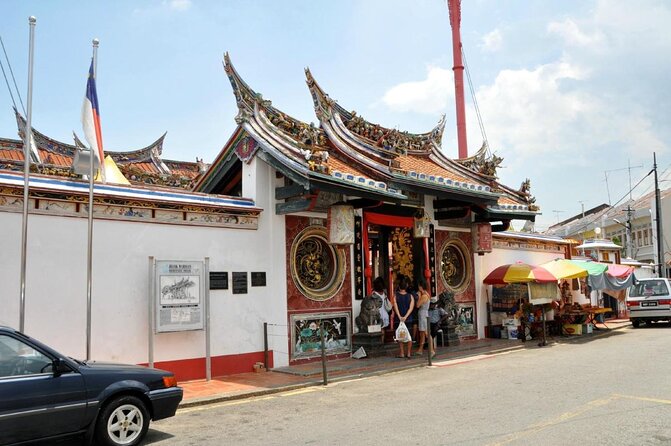
- Cheng Hoon Teng: oldest Chinese temple in Malaysia, built in 1646
- Portuguese Settlement and Mini Lisbon: names like D’Alberquerque and Texasira
- Where does A’Famosa and Porta De Santiago fit in?
- Lunch: a simple win that keeps the day from stalling
- Jonker Street by the Malacca River: your last chance to wander
- What guides can change on this tour
- Who should book this day trip, and who should skip it
- Should you book this Historical Malacca Day Trip from Kuala Lumpur?
- FAQ
- What time does the tour start?
- How long is the Malacca day trip?
- What’s the price per person?
- Is hotel pickup and drop-off included?
- What’s included in the tour besides sightseeing?
- Are the sites included in the itinerary free to enter?
- How many people are on the tour?
- Is cancellation free?
Key highlights worth your attention
- A UNESCO core, packed into one timed day with multiple landmark stops and a final stroll along Jonker Street
- Bukit China’s Ming Bride story and the famous Chinese cemetery setting outside China
- Dutch Stadthuys and Red Square with the look of 17th-century civic architecture
- A route built around shifting power through St Paul’s ruins, Christ Church, and St Peter’s Catholic roots
- Cheng Hoon Teng Temple and its Kuan Yin centerpiece in a still-active worship setting
- Lunch and hotel pickup included to reduce decision-making when you’d rather just enjoy the day
A UNESCO UNESCO-style day without the planning headache
You’re coming from Kuala Lumpur, where days can run on traffic and schedules. This trip is the opposite: you get picked up, you roll out early, and you spend the day walking through the layers that made Malacca a trading hub for centuries.
Malacca’s best trick is that it doesn’t feel like one culture posing in a museum. You see Portuguese-looking remnants on one hill, Dutch civic buildings around Red Square, and still-lived-in religious sites that keep their importance. That mix is exactly why the day works even if you’re not a hardcore history person.
Jonker Street keeps more days like this one
Price and logistics: what $85 buys you (and what it can’t)
At $85 per person, you’re paying for a full-day package: hotel pickup and drop-off, a driver/guide, lunch, and a mobile ticket. For a day like this, that’s not just convenience—it’s also practical. You avoid the mental load of arranging transport, figuring out routes, and timing multiple entry points.
What you don’t buy with a set itinerary is unlimited time in each place. Since this is a coach tour with a cap of 15 travelers, the day is efficient by design. If you’re the type who wants long photo stops, slow temple reading, and zero schedule pressure, you’ll need to manage expectations and look for the “quick but meaningful” version of each stop.
The real timetable: 8:30 start, then a long day in motion
The departure time is 8:30 am, and the trip runs about 8 hours. That generally means you’ll be spending a big chunk of the day on the road and in short, structured visits between sights.
A couple of things can change the feel of the day:
- Weather (rain happens—bring a rain layer)
- Pacing at each stop (some days can feel hurried)
- Traffic between parts of Malacca, especially around central areas
So yes, you get a lot of landmarks. Just don’t expect a slow Sunday stroll experience unless the schedule and guide timing cooperate.
Bukit China and the Ming Bride story: Chinese heritage with a legend attached
Your first big stop is Bukit China (Chinese Hill). This is where the tour connects a dramatic local origin story to a real, lasting community presence.
The tale goes like this: Malay history credits a royal marriage that brought an influx of Chinese settlers. When the Ming bride arrived, she supposedly came with a large entourage, including handmaidens—so the hill became a Chinese-dominated area that endures in memory and place.
There’s also a practical reason to care about this stop. The tour highlights it as the biggest Chinese cemetery from the 17th century located outside China, which is the kind of fact that turns a scenic hillside into something you can’t ignore. You’re not just looking at structures; you’re seeing how diaspora communities marked identity across generations.
Tip for this stop: wear shoes you trust. Even if the visit is short, you’ll likely be on uneven ground and paths that don’t forgive slippery soles.
Red Square and the Stadthuys look: Dutch civic power in red terracotta
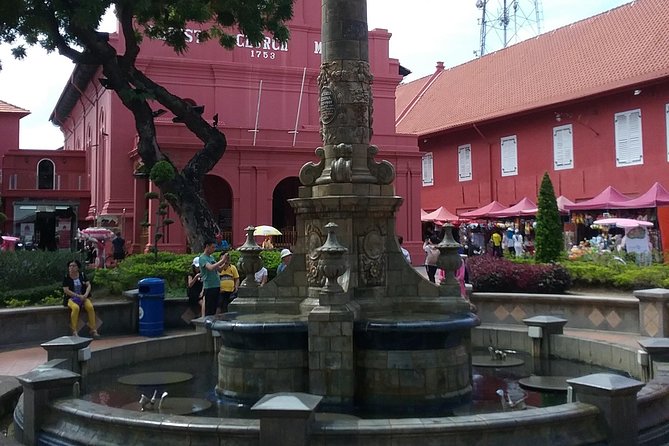
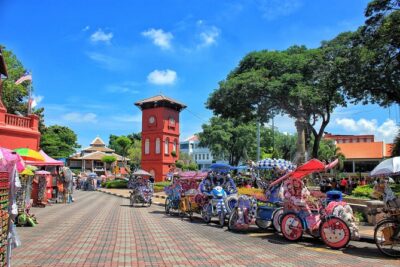
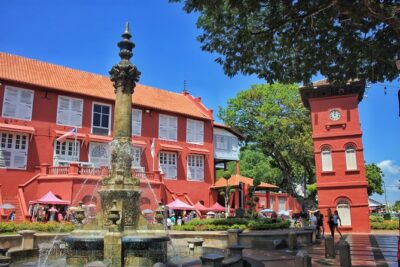
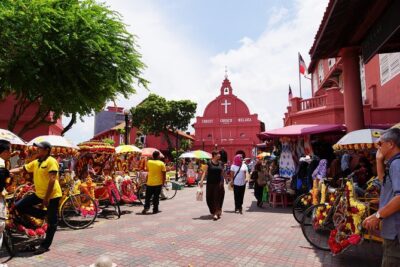
Next is Red Square (Dutch Square), anchored by the Stadthuys complex. The buildings here are described as bright terracotta-red colonial Dutch structures, with louvered windows and chunky doors topped with wrought iron hinges.
What makes it satisfying on the ground is that it doesn’t feel random. This is civic architecture—built between 1660 and 1700—so it tells a different story than a church does. You get a sense of how the Dutch ran things: administration, control, and public presence.
Inside the Stadthuys, the tour notes white monumental staircases and high windows. Even if you don’t go deep into museum-style details, the building’s layout helps you picture how people moved through the colonial system.
If you’re a photo person, this is one of the best stops for straight-on building shots. The colors and symmetry are easy to frame fast.
Further back into Malayan history

St Paul’s ruins on the hill: Portuguese architecture without the full building
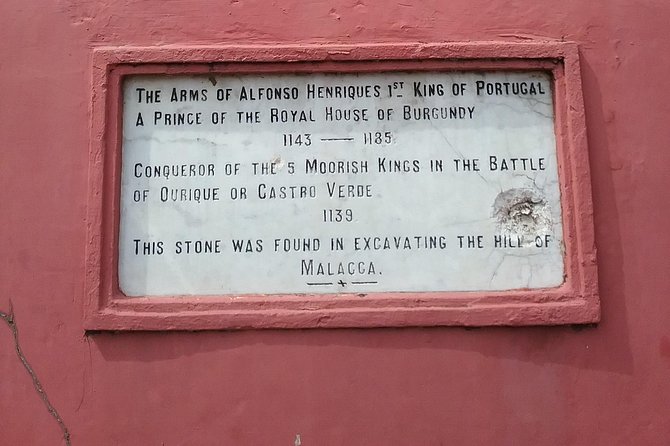
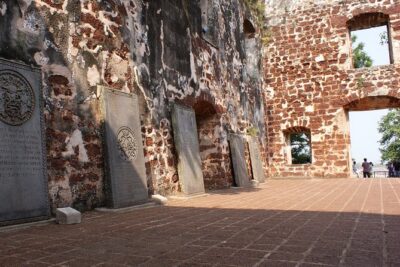
Then you head to St. Paul’s Hill & Church (Bukit St. Paul). Here, the focus is ruins, not reconstruction. The exterior is mostly Portuguese-style ruins, and you’ll walk a small paved path to reach the interior area of the church ruins.
The church is dedicated to Saint Paul the Apostle, and you’ll see his statue painted in white. That little visual detail matters because it gives you a clean focal point when everything around it is broken into fragments of the past.
A quick reality check: when you’re seeing ruins, the experience depends on how much time you’re given. If the day feels rushed, prioritize the viewpoint and the main interior ruins area first. Don’t wait until the end of the stop to try to catch the best angle.
Christ Church: the big white cross and 200-year-old handmade pews
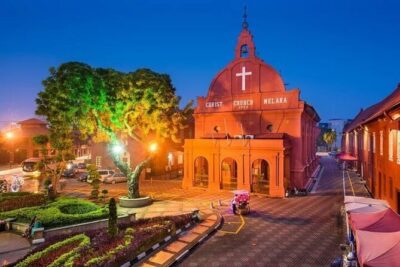
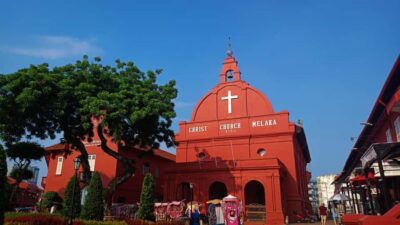
Christ Church is one of those landmarks you recognize instantly. It was built in 1753 to mark a century of Dutch occupation. Outside, it’s a brick-red building with a huge white cross at the top.
Inside, the tour highlights 200-year-old handmade pews, decorative fanlights, and plaques honoring Dutch soldiers and locals. It’s not just architecture—it’s memory carved into objects and inscriptions.
When the British took over Malacca, the church’s story shifted again. The tour notes they added a weathercock and bell and transformed it from a Protestant church into an Anglican one. That evolution is the point: the building acts like a timeline you can walk through.
If you love places where one wall tells multiple chapters, this is a must.
St Peter’s Church: the oldest operational Catholic church in Malaysia
Next is St. Peter’s Church, described as the oldest operational Catholic church in Malaysia. It was built in 1710 on land donated by a Dutchman named Maryber Franz Amboer.
The oldest item mentioned is the bell, manufactured in Goa in 1908. That detail helps you connect Malacca to a wider global web. You’re not just thinking local history; you’re seeing how trade and craftsmanship traveled too.
Since it’s operational, keep your behavior low-key and respectful. In practice, that means quieter steps, slower movement, and attention to signage—especially if you catch it during worship hours.
Cheng Hoon Teng: oldest Chinese temple in Malaysia, built in 1646
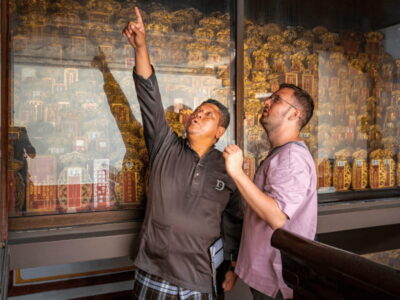
If you want one stop that feels spiritually “alive” rather than purely historical, it’s Cheng Hoon Teng Temple. It’s described as the oldest Buddhist place of worship in Malaysia, built in 1646, and known as the Merciful Cloud Temple.
The temple is dedicated to Kuan Yin, Goddess of Mercy, and the tour points out a central prayer hall statue in black, gold, and red robes.
This is one of the easiest places to slow down—because you’ll naturally look at how people behave: where they stand, where they pause, and what they focus on. Even with a timed visit, you can still pick up a sense of everyday continuity.
Photo note: if people are praying or lighting offerings, don’t make your camera louder than the moment. Quick, respectful shots beat staged ones.
Portuguese Settlement and Mini Lisbon: names like D’Alberquerque and Texasira
One of the more fun parts of the day is the Portuguese Settlement, sometimes called Mini Lisbon. The story is tied to early 1930s history: a British Resident allowed a fishing village of wooden huts in swampy land next to the sea, at the request of a French missionary.
It was originally called St. John’s Village, and it became a base for people of Portuguese ancestry to preserve religion, language, and traditions. Today, the settlement includes streets named D’Alberquerque, Sequera Eredia, D’Aranjo, and Texeira.
Even if you don’t know Portuguese history deeply, street names are a clever shortcut. They give you something to read while you walk—like a living map where language is the heritage.
When this stop works well, you’ll feel it instantly: Malacca shifts from “grand landmark city” to “small streets where identity lives.”
Where does A’Famosa and Porta De Santiago fit in?
The tour overview includes A’Famosa (Porta De Santiago) as one of the top sights. In a day like this, that typically means you’ll pass through or view the fortress area as part of your UNESCO core loop.
Since the details here aren’t expanded like the churches and temples, treat it as a “see it, get oriented, move on” moment. It’s still worth paying attention because A’Famosa is tied to Malacca’s trading-port defensive history—the reason the city mattered enough for European powers to fight over it.
Lunch: a simple win that keeps the day from stalling
Lunch is included at a popular local restaurant. This matters more than it sounds. When you’re touring from place to place, hunger turns every stop into a countdown.
If you want to use your time wisely, eat with a light pace. You’re not trying to solve lunch like it’s a weekend brunch; you’re refueling so you can enjoy the next set of sites.
Also, ask what’s typical if you’re unsure what to order. The tour format doesn’t give much space for long research, so go with what’s offered and familiar.
Jonker Street by the Malacca River: your last chance to wander
At the end of the day, you’ll return to Kuala Lumpur in the early evening after a walk around Jonker Street along the Malacca River.
This is where you can switch gears from “structured viewing” to “casual browsing.” Think snacks, small shops, and the chance to pick up a few souvenirs without turning it into a scavenger hunt. Just keep in mind that your time here may be limited by rain, traffic, and the overall schedule.
From a practical standpoint: if you plan to buy anything, decide quickly. The best souvenirs are the ones you actually have time to inspect.
What guides can change on this tour
The biggest day-to-day difference on a group tour is the guide’s pace and priorities. In positive feedback, a guide named Stephen stood out for being an articulate storyteller who helped without hovering.
In less smooth experiences, pacing became an issue—either time spent on the coach felt long, stops felt brief, or the guide moved along without much flexibility. There were also mentions of the tour not always matching what was expected about walking time at certain areas.
My advice: go in knowing you’re joining a coach day. If you want extra time at one stop, be ready to ask early and clearly, and don’t wait until the guide has started moving the group.
Also, pack patience. This itinerary squeezes many sites into one day, so any small delay adds up fast.
Who should book this day trip, and who should skip it
This tour fits best if you:
- Want a first-time introduction to Malacca’s UNESCO core
- Like history that shows up in real streets and active worship sites
- Prefer guided structure over self-planning from scratch
- Are happy with short stops as long as the story is good
You might want to skip or choose a slower option if you:
- Hate being rushed and want long, flexible time at each sight
- Are sensitive to weather changes and need a calmer schedule
- Expect a deep, museum-style experience for every church and building
Should you book this Historical Malacca Day Trip from Kuala Lumpur?
I’d book it if you’re after a well-packaged, low-effort way to see Malacca’s big hitters in one day. The combination of hotel pickup, lunch, and a route that jumps from Dutch civic spaces to Chinese temple worship to Portuguese street identity is exactly the kind of value-packed overview that helps you decide what you want to revisit later.
Hold off if you know you’ll be disappointed by limited time at each stop. This is efficient, not slow. If you’re okay with that trade, you’ll leave with a strong mental map of Malacca—and a few places you’ll want to return to at your own pace.
FAQ
What time does the tour start?
The start time is 8:30 am.
How long is the Malacca day trip?
It lasts about 8 hours (approx.).
What’s the price per person?
The price is $85.00 per person.
Is hotel pickup and drop-off included?
Yes. The tour includes hotel pickup and drop-off.
What’s included in the tour besides sightseeing?
Lunch, the driver/guide, and hotel pickup/drop-off are included.
Are the sites included in the itinerary free to enter?
The listed stops show admission ticket free.
How many people are on the tour?
It’s a coach tour with a maximum of 15 travelers.
Is cancellation free?
Free cancellation is available up to 24 hours in advance for a full refund.
Old Malaya, Revisited
- Historical Malacca Guided Day Tour (Shared Tour)
★ 5.0 · 2,172 reviews - Kuala Lumpur: Batu Caves & Historic Buildings Tour
★ 4.7 · 539 reviews - Historical Malacca Day Tour from Kuala Lumpur (Private Tour)
★ 5.0 · 515 reviews - From Kuala Lumpur: Private Batu Caves Cultural Tour
★ 4.4 · 410 reviews
Filed Under Kuala Lumpur
- Kuala Lumpur: Batu Caves Half-Day Tour with Pick-Up Option
★ 4.5 · 4,288 reviews - Private Half-Day Batu Caves and Cutural Tour in Kuala Lumpur
★ 5.0 · 3,107 reviews - Sambal Streets Kuala Lumpur Food Tour with 15+ Tastings
★ 5.0 · 2,438 reviews - Historical Malacca Guided Day Tour (Shared Tour)
★ 5.0 · 2,172 reviews
Melaka, Door to Door
- Historical Malacca Guided Day Tour (Shared Tour)
★ 5.0 · 2,172 reviews - Historical Malacca Day Tour from Kuala Lumpur (Private Tour)
★ 5.0 · 515 reviews - Historical Malacca Tour with Lunch from Kuala Lumpur
★ 3.5 · 317 reviews - Kuala Lumpur: Malacca Day Trip with River Cruise and Lunch
★ 4.6 · 312 reviews
Fresh Reviews from the Klang Valley
- Kuala Lumpur by Night: Food, Culture & City Lights Tour”
★ 4.5 · 3 reviews - Kuala Lumpur Customizable Tour
★ 5.0 · 3 reviews - National Zoo with Giant Panda
★ 3.5 · 3 reviews - Kuala Lumpur City to Kuala Lumpur International Airport Transfer
★ 5.0 · 3 reviews - Private Magical View With Petronas Tower & Cultural Dinner
★ 4.2 · 3 reviews
Melaka Day Tours from KL, compared.
 ★ 5.0Historical Malacca Guided Day Tour (Shared Tour)From $322,172 reviews
 ★ 5.0Historical Malacca Day Tour from Kuala Lumpur (Private Tour)From $87515 reviews
 ★ 3.5Historical Malacca Tour with Lunch from Kuala LumpurFrom $127317 reviews
 ★ 4.6Malacca Day Trip with River Cruise and LunchFrom $78312 reviews
 ★ 4.5Malacca Historical Private Tour With Personal ChauffeurFrom $95151 reviews
 ★ 4.0Malacca Sunset Tour: UNESCO Heritage Highlights & River CruiseFrom $102108 reviews
 ★ 4.5From Kuala Lumpur: Private Full Day Tour to MalaccaFrom $8894 reviews
 ★ 5.0Malacca Instagram Tour: Most Famous Spots (Private & All-Inclusive)From $18437 reviews
Browse the lists this tour appears in