

Reviewed · KL HERITAGE WALKS
Kuala Lumpur Colonial History Walk – Private Guided Tour
Colonial KL fits surprisingly well on foot. This private 3–4 hour walk pairs guide storytelling with building-by-building context, and I love how the route turns famous sights like KL Railway Station into something you can actually picture and understand. I also like that it’s designed for a small group, so you’re not stuck listening from the back row. One consideration: it’s a walking tour, with no bottled water or meals included, so plan for a basic comfort kit and pace yourself.
You start at KL Railway Station and finish at Central Market, so the day has a natural arc: grand rail architecture out front, then commerce and colonial-era institutions as you move toward the city’s market heart. The tour includes printed material and a mobile ticket, plus the admission fees for the stops are handled, which makes the whole thing feel smooth and low-friction.
What makes this one different from the usual “checklist” tours is the tone. You’re guided by a personal storyteller who connects the British-era structures to what was happening around them in Kuala Lumpur—trade, administration, and everyday access—so you leave with a clearer sense of why these buildings exist where they do.
In This Review
- Key Highlights You’ll Feel Right Away
- A Colonial Kuala Lumpur Walk That Actually Sticks
- From KL Railway Station to Central Market: How the Route Reads
- KL Railway Station and the FMS Rail Office: Follow the Domes
- The Klang River Origins: Geography as the City’s First Plan
- Old Market Square Clock Tower: A Royal Date in the Middle of Town
- Jamek Mosque to St. Mary’s Cathedral: Different Faiths, Different Power
- Sultan Abdul Samad Building: Government Architecture You Can Read
- Selangor Club and Queen Victoria Fountain: Who Belonged, Who Waited
- Kuala Lumpur Library (Government Printing Office): Paperwork Made Visible
- Chartered Bank Building at 2 Jalan Ampang: Money, Mapped
- Old FMS Railway Office and Central Market: From Trains to Trade
- Price and Value: What $45 Buys You in Real Terms
- Practicalities: Timing, Walking Pace, and What to Bring
- Should You Book This Colonial History Walk?
- FAQ
- How long is the Kuala Lumpur Colonial History Walk?
- Where does the tour start and end?
- What’s included in the tour price?
- Is bottled water included?
- Is this a private tour?
- Can I cancel for a full refund?
Key Highlights You’ll Feel Right Away

- A small private experience for up to 4 guests, not a crowded group shuffle
- Three hours of colonial architecture told through details, not just dates
- A smart start-to-finish walk: KL Railway Station to Central Market
- Admission fees handled for the included stops, so you can focus on the sights
- A flexible, practical pacing that fits a moderate fitness level
A Colonial Kuala Lumpur Walk That Actually Sticks
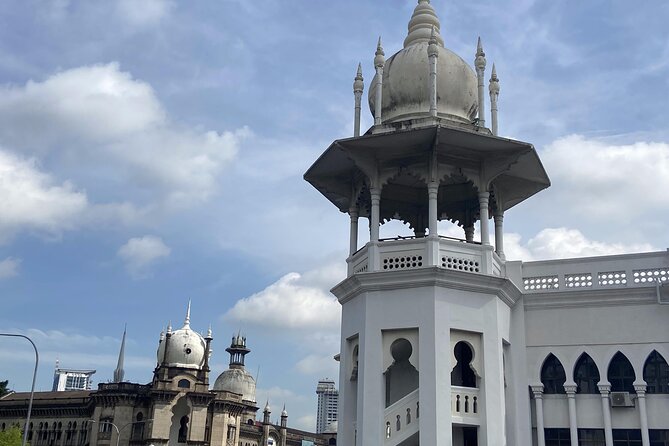
If you’re short on time, Kuala Lumpur can feel like a blur of landmarks. This tour helps you slow down just enough to notice patterns: domes and towers, river geography, government symbolism, and the way rail and banking shaped where people went.
I like that the tour isn’t trying to cover everything. Instead, it focuses on a compact core, walking you past major colonial-era buildings that are free to visit and easy to photograph once someone explains what you’re looking at. The result is you don’t just see “pretty structures.” You understand the roles they played.
And because it’s private, you can ask follow-up questions when something sparks your interest—architecture style, colonial administration, or how the city’s layout grew around trade routes.
Kampung Baru lanes and more walks like this
From KL Railway Station to Central Market: How the Route Reads
The walk starts at Kuala Lumpur Railway Station, then works across the central colonial zone. The best part is the ending: Central Market. You’re not dropped into a random spot. You finish in an area with strong transport connections back to your hotel, and it’s an easy transition if you want to keep exploring afterward.
Along the way, the tour threads together three big themes:
- Rail and administration (how movement and paperwork ran the system)
- Religion and civic power (what communities built, and where)
- Commerce and symbolism (markets, banks, and royal monuments)
That structure matters because colonial Kuala Lumpur isn’t one single story. It’s multiple institutions built side-by-side, and once you see the pattern, the city feels less like a set of monuments and more like a functioning system.
KL Railway Station and the FMS Rail Office: Follow the Domes
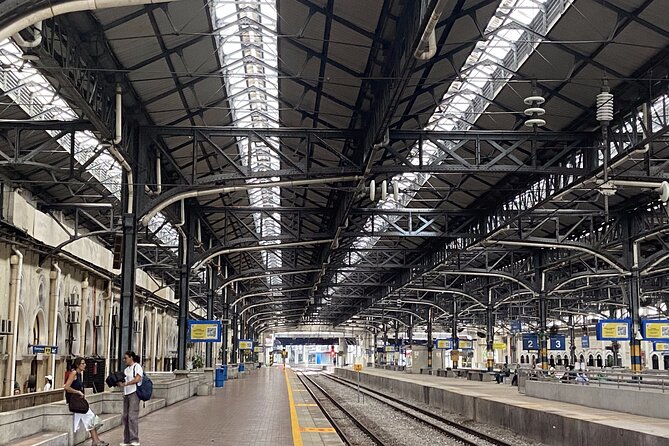
Your first stop is Kuala Lumpur Railway Station—famously dramatic, with domes and minaret-like shapes. Even if you’ve seen photos before, standing there helps you understand why it grabs attention. It’s not just architecture for architecture’s sake. In an era when rail meant connection and control, the station became the physical front door of the colonial economy.
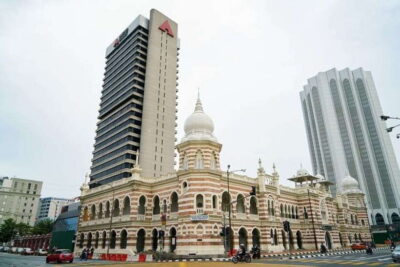
Across the way is the Malayan Railway Administration Building, the FMS Railway Administration Office designed by Government Architect Arthur Benison Hubback. Construction began in 1914, a key detail because it puts the building in the early 20th-century push to organize and formalize rail power. Hubback’s work shows how colonial administration often blended practicality with an image meant to look impressive and permanent.
Later on, you’ll return to the rail story with Old FMS Railway Office, described as the first headquarters of the Federated Malay States Railways (FMSR). The point here is the shift from fragmented state railways to a unified system. That kind of change doesn’t just affect trains. It reshapes cities, hiring, planning, and where people and supplies concentrate.
Practical tip: when you’re near rail buildings, keep an eye on entrances, symmetry, and how the structures face the street. The guide’s explanation helps you read the buildings like signs, not like scenery.
The Klang River Origins: Geography as the City’s First Plan
Between the rail and civic stops, you’ll get a clear reset with the Klang River. It’s about 120 km long and is Selangor’s longest river, flowing through Kuala Lumpur. The key value of this moment is simple: the city didn’t grow in a vacuum. Water access, river junctions, and the movement of goods shaped where early settlement and important institutions landed.
This matters especially when you reach Jamek Mosque, positioned at the birthplace of the city at the confluence of the muddy Klang and Gombak rivers. Even the city’s name traces back to this geography, which is the kind of detail that makes the walking route feel purposeful rather than random.
If you like learning how cities work, this is one of the most satisfying “aha” stops on the route. It connects a map idea to a real location.
Old Market Square Clock Tower: A Royal Date in the Middle of Town
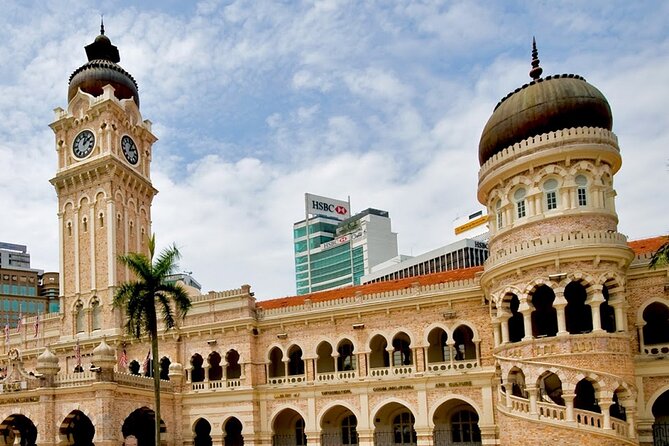
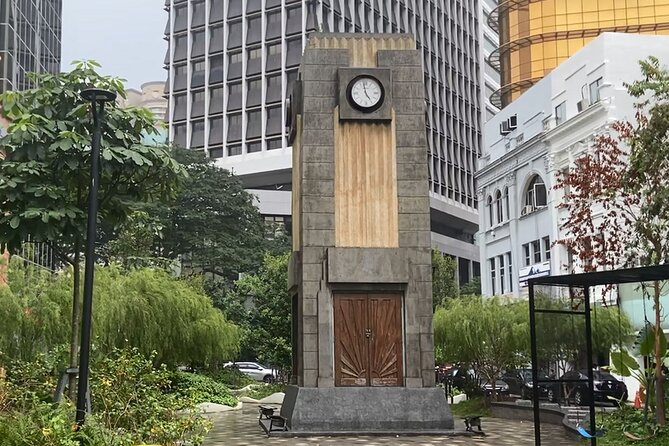
Next up is the Old Market Square Clock Tower, built in 1937 to mark the coronation of His Majesty King George VI. The tower was conceived by Arthur Oakley Coltman, and it sits in a setting that mixes everyday life with imperial messaging.
Here’s why it’s worth your attention: clock towers are time-and-power tools. They set a shared rhythm for markets, schedules, and public movement. In a colonial city, public time often meant economic time—when goods arrived, when people worked, and when commerce got underway.
You’ll probably find the location feels familiar even if you’ve never paid attention to the tower before. That’s a good sign. It means you’re learning to see the city’s meaning, not just its highlights.
Thean Hou, the mosques and more sacred stops


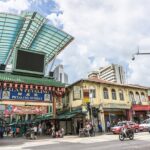
Jamek Mosque to St. Mary’s Cathedral: Different Faiths, Different Power
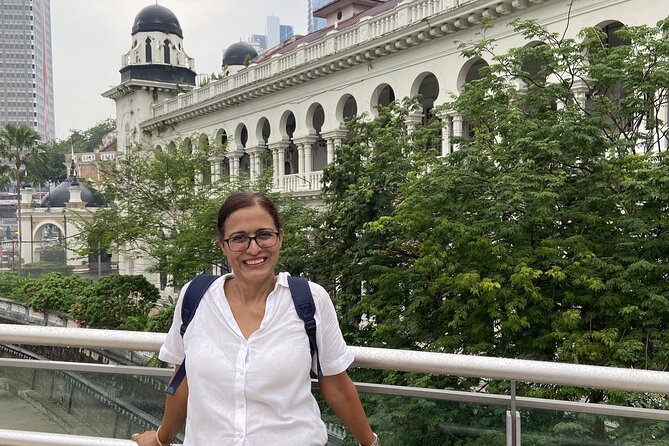
At Jamek Mosque, you’re seeing a landmark tied to the city’s origin story—right where the rivers meet. The mosque’s placement isn’t incidental. It anchors the idea that early Kuala Lumpur grew through geography first, then through community buildings.
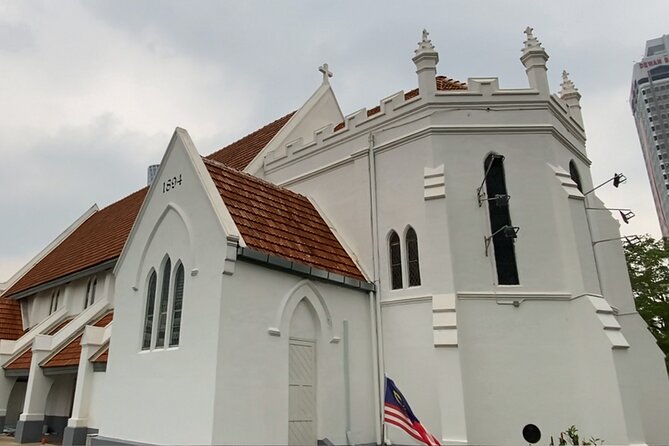
St. Mary’s Cathedral comes later in the walk, and it brings a different thread: Anglican colonial-era Christianity. The church of St Mary the Virgin began as a timber edifice in 1887 atop Bukit Aman hill, then was replaced by the current brick structure in 1895. That progression—from modest timber to a lasting brick sanctuary—mirrors the colonial era’s habit of scaling up institutions as they solidified control.
When you walk past places like this with a good guide, you notice something important: religion here isn’t only spiritual. It also signals community permanence and who had resources to build what they needed.
If you want the tour to feel respectful and smooth, plan for mosque and church etiquette (and dress in a way that keeps you comfortable). The tour descriptions don’t spell out rules, so I recommend you follow local guidance on the day.
Sultan Abdul Samad Building: Government Architecture You Can Read
Sultan Abdul Samad Building is part of a government complex flanked by the former General Post Office, Magistrate Courts, and Kuala Lumpur Council Building. Built in 1894 for the British colonial administration, it reflects how colonial governance used architecture to project order.
What I like here is how the building helps you connect dots across multiple institutions. You’re not just seeing one site; you’re seeing how a whole cluster functioned as the administrative backbone. Once your guide explains the context, the street stops being a row of buildings and becomes a map of authority.
This is also one of those stops where you’ll get the most value if you ask questions like:
- Who used these buildings?
- What functions were grouped together?
- Why does the architecture look the way it does?
Private tours make that kind of interaction easy.
Selangor Club and Queen Victoria Fountain: Who Belonged, Who Waited
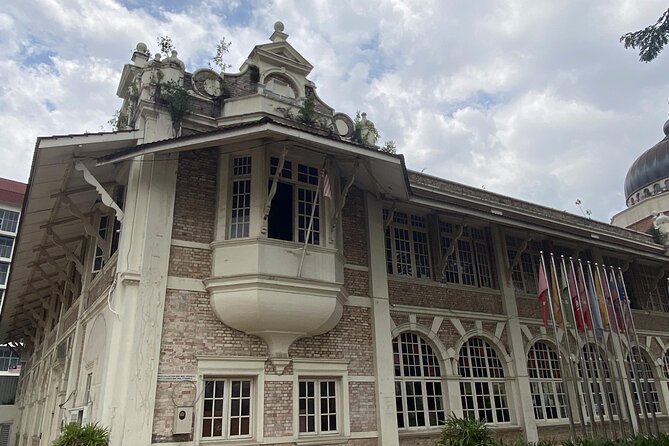
The Selangor Club stop is a reminder that colonial cities had strict social boundaries. Founded in 1884, it served as a meeting place for educated and high-ranking British colonial society. While early membership included British members, admission was based on education—still a very selective filter, and one that shaped who had influence and access to the social conversation.
Nearby, you’ll see Queen Victoria Fountain, shipped from Britain to commemorate Queen Victoria’s diamond jubilee in 1897. It’s a small detail with big meaning. These royal monuments were physical reminders that the empire extended beyond politics and into daily visual space.
When you connect these two stops, you start to see a pattern: the colonial system wasn’t only about rules and paperwork. It also built “civil society” spaces—clubs, fountains, and symbolic corners—that reinforced hierarchy.
Kuala Lumpur Library (Government Printing Office): Paperwork Made Visible
At Kuala Lumpur Library, you’re guided toward the former Government Printing Office, completed in 1899. This is where government reports and official books were printed—an unglamorous function on paper, but a powerful one in practice.
Why this stop is so useful: colonial administration ran through documents. Laws, notices, and official publications shaped how people understood rules and how the system communicated with the public. Seeing the printing office building turns an invisible process into something you can stand beside.
If you like learning how power works, not just how it looks, this is one of the most satisfying stops.
Chartered Bank Building at 2 Jalan Ampang: Money, Mapped
You’ll also visit 2, Jln Ampang, completed in 1909. The building housed the main branch of the Chartered Bank of India, Australia and China—later known as Standard Chartered. The bank was founded in London in 1853, which ties the local structure directly to global finance networks.
The practical takeaway: when banks show up in colonial city centers, it tells you where money needed to be and who could reach it easily. It’s a reminder that rail, government offices, and banking were part of the same system.
This stop also helps you shift perspective. The city isn’t just “colonial architecture.” It’s trade infrastructure, built in stone and stone-like permanence.
Old FMS Railway Office and Central Market: From Trains to Trade
The final rail-linked stop, Old FMS Railway Office, marks the consolidation of railways into a unified system. The description also references Malaya’s first line opening in 1885 from Taiping to Port—showing how early rail connections supported movement and economic planning.
Then you reach Central Market Kuala Lumpur. The market story starts with Kapitan Yap Ah Loy, who conceived it as a humble wet market in 1888. Over time, it evolved into a splendid hall of commerce, replacing the original structure with a grander setup.
This is a strong ending because it connects the earlier parts of the walk to what people actually did every day. Rail and administration influence supply and schedules. Markets turn that into food and goods you can see, smell, and buy. Even if you don’t plan to linger, the stop gives you a satisfying final “use” for the colonial layout you’ve been reading.
Price and Value: What $45 Buys You in Real Terms
At $45 per person for a 3–4 hour private walk, this tour can feel like a splurge—until you break down what’s included. Your admission fees are covered for the included stops, and you get printed material plus a guide who focuses on a small group setting (personalised for up to 4 guests). That’s a big difference from mass group tours where you spend most of your energy trying to hear over other people’s conversations.
You’re also paying for time-saving interpretation. Instead of wandering alone, you’re learning what to notice at each building. If you’re the kind of person who likes to understand architecture and city planning, that interpretive layer is the real value.
It can also be a good deal if you’re traveling with someone. Even though the price is per person, small groups can make private tours feel more reasonable than you’d expect.
Practicalities: Timing, Walking Pace, and What to Bring
This tour is listed at 3–4 hours and requires a moderate physical fitness level. That doesn’t mean it’s an endurance event, but it does mean comfy shoes help. You’ll be walking through central areas where you want to move confidently.
Two practical notes from the tour details:
- Bottled water is not included
- Meals are not included
So I recommend you bring a refillable bottle if you can, or plan a snack stop before or after. The tour runs from KL Railway Station to Central Market, and Central Market is a short walk from where you can access public transport back to your hotel.
Also, the tour uses a mobile ticket and you’ll receive confirmation at booking. If you’re the type who likes calm logistics, that kind of setup usually reduces stress on the day.
Should You Book This Colonial History Walk?
I think you should book this tour if you want a clear, well-paced way to understand colonial Kuala Lumpur without feeling like you’re speed-running tourist stops. It’s a strong fit for couples, small families, and solo travelers who like architecture, city planning, and stories tied to real places.
You might skip it if you’re trying to do a super relaxed sightseeing day with minimal walking, because this is built around a steady walk through multiple key structures. But if you’re okay with 3–4 hours on your feet, you’ll likely come away with a much better sense of how Kuala Lumpur was shaped—by rail, government systems, religious institutions, and the market economy.
FAQ
How long is the Kuala Lumpur Colonial History Walk?
The tour lasts about 3 to 4 hours.
Where does the tour start and end?
It starts at Kuala Lumpur Railway Station and ends at Central Market Kuala Lumpur.
What’s included in the tour price?
Admission fees, printed material, and a private walking tour experience for up to 4 guests are included.
Is bottled water included?
No, bottled water is not included.
Is this a private tour?
Yes. It’s a private tour/activity, and only your group participates.
Can I cancel for a full refund?
You can cancel for a full refund up to 24 hours in advance of the experience start time. If you cancel less than 24 hours before, the amount paid won’t be refunded.
Filed Under Kuala Lumpur
- Kuala Lumpur: Batu Caves Half-Day Tour with Pick-Up Option
★ 4.5 · 4,288 reviews - Private Half-Day Batu Caves and Cutural Tour in Kuala Lumpur
★ 5.0 · 3,107 reviews - Sambal Streets Kuala Lumpur Food Tour with 15+ Tastings
★ 5.0 · 2,438 reviews - Historical Malacca Guided Day Tour (Shared Tour)
★ 5.0 · 2,172 reviews
Domes, Deities and Old Walls
- From Kuala Lumpur: Private Batu Caves Cultural Tour
★ 4.4 · 410 reviews - Half Day Cultural And Batu Caves Tour in Kuala Lumpur
★ 5.0 · 344 reviews - Kuala Lumpur: Private Batu Cave, National Mosque Tour, Lunch
★ 4.7 · 236 reviews - Private Half-day Batu Caves and Cultural Tour Kuala Lumpur *2026*
★ 5.0 · 165 reviews
KL at Walking Pace
- Kuala Lumpur Local Street Food Private Walking Tour by Night
★ 4.5 · 224 reviews - Kuala Lumpur: Nightlife Walking Tour with Local Guide
★ 5.0 · 33 reviews - Kuala Lumpur: Private Walking Tour with a Local
★ 4.5 · 28 reviews - Half Day Cultural And Heritage Walking Tour in Kuala Lumpur
★ 5.0 · 28 reviews
Fresh Reviews from the Klang Valley
- Kuala Lumpur by Night: Food, Culture & City Lights Tour”
★ 4.5 · 3 reviews - Kuala Lumpur Customizable Tour
★ 5.0 · 3 reviews - National Zoo with Giant Panda
★ 3.5 · 3 reviews - Kuala Lumpur City to Kuala Lumpur International Airport Transfer
★ 5.0 · 3 reviews - Private Magical View With Petronas Tower & Cultural Dinner
★ 4.2 · 3 reviews
KL Heritage Walks, compared.
 ★ 4.5Kuala Lumpur Local Street Food Private Walking Tour by NightFrom $68224 reviews
 ★ 5.0Nightlife Walking Tour with Local GuideFrom $2533 reviews
 ★ 4.5Private Walking Tour with a LocalFrom $4828 reviews
 ★ 5.0Half Day Cultural And Heritage Walking Tour in Kuala LumpurFrom $3928 reviews
 ★ 5.0Kuala Lumpur InfoFun Walking Tour ExperienceFrom $4024 reviews
 ★ 4.5Kuala Lumpur Heritage WalkFrom $6023 reviews
 ★ 4.5Private custom walking tour with a local guideFrom $4718 reviews
 ★ 5.0Kuala Lumpur Heritage 4-Hour Walking TourFrom $6010 reviews
Browse the lists this tour appears in