
Food markets tell the story fast. This Kuala Lumpur class pairs a TTDI wet-market visit with a hands-on cooking session where you learn classic Malay and Indian-influenced dishes. The format works especially well if you like getting your bearings through real ingredients, not just recipes on paper.
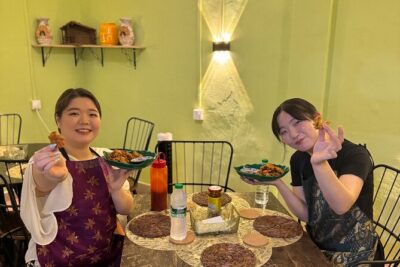
I like that it’s small-group (max 14), so your instructor can correct technique and keep questions moving. I also like that your meal is part of the lesson: you cook, then you eat what you make (lunch included).
One thing to watch: there’s no hotel pickup or drop-off. The experience starts at Pasar Besar Taman Tun Dr. Ismail (near public transport), so you’ll want to plan your morning route and aim to arrive early.
In This Review
- Key highlights to know before you go
- Why this TTDI Market-to-Kitchen format hits the right note
- Market Tour at Pasar Besar Taman Tun Dr. Ismail: what you’re actually learning
- The cooking school setup: hands-on stations, English instruction, and control of pace
- What you’ll cook: char kway teow, nasi lemak, roti canai (and why each one teaches something)
- Char kway teow (fried noodles)
- Nasi lemak (coconut rice)
- Roti canai (flaky Indian-style flatbread)
- Lunch and communal dining: eating what you made with real conversation
- Price and logistics: value is there, but plan your morning route
- Who this cooking class suits best in Kuala Lumpur
- Small-group feel: why attention from the instructor matters here
- Should you book this Malaysian cooking class and market tour?
- FAQ
- What is the meeting point for this experience?
- What time does the market tour and cooking class start?
- How long is the experience?
- Is hotel pickup or drop-off included?
- What dishes will I cook?
- Is the class taught in English?
- Are there vegetarian or vegan options?
- What’s the group size?
- Is lunch included?
- Are there date restrictions?
Key highlights to know before you go
- TTDI Wet Market start at Pasar Besar, where you learn ingredients before you cook
- Up to 14 people makes it easier to get help at your station
- Step-by-step cooking with mixing, utensil use, and a practical lesson flow
- You cook lunch and eat it right away with communal dining and conversation
- Dishes you’ll likely make include char kway teow, nasi lemak, and roti canai
- Vegetarian/vegan substitutions are available if you plan ahead with your needs
Why this TTDI Market-to-Kitchen format hits the right note
This is a smart way to learn Malaysian cooking because you see ingredients first, then you cook with context. In many classes, you only get a recipe and a list. Here, you start at the TTDI Wet Market (Pasar Besar), meeting your guide and learning what to look for.
That order matters. When you understand what herbs smell like, what spices look like, and how fresh produce changes a dish, you cook with better instincts. And because the class runs Tuesday through Saturday (with a 8:30am start), you’re not stuck waiting for a weekend slot.
The other reason this works: the tone is social. You cook, compare notes with the other cooks, and then eat together. If you enjoy food as a cultural event (not just a skill-building exercise), this style of morning tends to feel fun and easy to follow.
Learn the rempah properly, more kitchens
Market Tour at Pasar Besar Taman Tun Dr. Ismail: what you’re actually learning
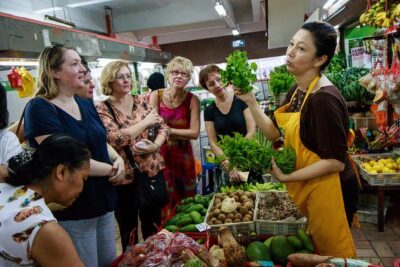
The market portion begins at Pasar Besar, Taman Tun Dr. Ismail (meeting point TS37). Your start time is listed as 8:15am, so plan to arrive at least 15 minutes early. That isn’t just politeness; it helps you settle in before the shopping/ingredient walk kicks off.
In the market, the focus is on ingredients and the logic behind them. You’ll learn how Malay and regional cooking uses fresh items and fragrant herbs, not just dry spices. One of the standout notes from a previous experience was the guide, Sally, helping people understand how to use different traditional herbs and ingredients. That kind of explanation is exactly what turns a market stop into real learning.
You’ll likely cover things like:
- how ingredients are identified and chosen
- why certain herbs show up in certain dishes
- how ingredient freshness affects taste and texture
Even if you’ve cooked before, this part can sharpen your eye. Even if you’re brand new, it gives you a simple mental map: see it at the market, then expect to handle it later at your station.
Practical tip: bring your curiosity more than your shopping list. The goal is understanding, not packing a trunk full of produce.
The cooking school setup: hands-on stations, English instruction, and control of pace
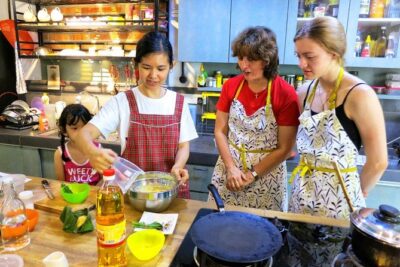
After the market tour, the class moves to the cooking school for a hands-on lesson. You’ll start with a health and safety briefing, then jump into cooking at a dedicated kitchen station. The teaching approach is step-by-step, including how to mix ingredients and how to use utensils correctly.
This “station” format matters because it reduces downtime. You’re not waiting for the instructor to finish one demonstration and hope you catch up later. Instead, you learn in the moment—then you apply it. It’s also more comfortable for different skill levels. The class is designed so both beginners and experienced cooks can stay productive.
Language is another practical win: classes are conducted in English. That makes a big difference when you’re learning technique (timing, heat control, texture cues) and not just vocabulary.
And because the group size is capped at 14, it’s easier for the host to check on you. If you like quick corrections—less “good luck, see you later”—this is the right structure.
What you’ll cook: char kway teow, nasi lemak, roti canai (and why each one teaches something)
The menu is built around Malaysian comfort classics and key techniques. The dishes you can expect to cook include:
Char kway teow (fried noodles)
This dish teaches you how to balance heat and timing. Noodles are unforgiving: they can turn soggy or clump if your rhythm is off. In a hands-on class, you learn how to manage the pan work rather than just reading about it.
Wax, dye and pewter, more maker sessions

Nasi lemak (coconut rice)
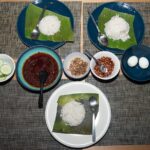
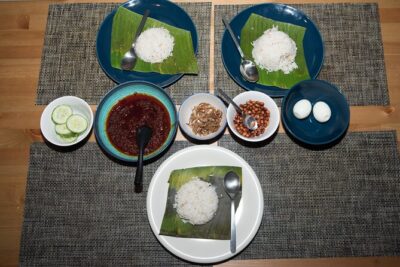
Nasi lemak is a great lesson in aroma and proportion. Coconut rice isn’t complicated, but it’s sensitive to flavor building. You’ll understand how coconut and spices create the base taste that everything else sits on.
Roti canai (flaky Indian-style flatbread)
Roti canai is all about texture. Even when you don’t nail it instantly, you learn the feel of dough handling and how layering/technique affects the final “flake” effect. It’s also one of those dishes that makes people smile because the process is hands-on and visually rewarding.
You’ll also work with ingredients and herbs discussed during the market part. That’s the hidden value here: the market tour isn’t “extra.” It’s there to help your cooking decisions make sense later.
Lunch and communal dining: eating what you made with real conversation
The program ends around 1:30pm after lunch. The lunch portion is included, and it’s what you prepared during class. So you’re not paying for a meal someone else cooked for you. You get the full loop: shop/learn, cook/adjust, then taste it while it’s still at its best.
The dining style is communal, with time for conversation. That can be useful even for quieter people. Food creates a shared topic fast, and you’re surrounded by people who care about cooking and ingredients.
If you’re the type who hates tours that feel like a checklist, this part tends to feel more human. It’s not just “show up, cook, leave.” It’s more like morning teamwork ending in a satisfying lunch.
Price and logistics: value is there, but plan your morning route
At $149.96 per person, you’re paying for more than a cooking class. You’re getting:
- the market tour portion
- the hands-on cooking lesson and instruction
- ingredients and equipment
- lunch (from what you cook)
- a small-group cap of up to 14
That’s a decent bundle for a half-day experience, especially because the class includes both shopping and cooking rather than only one. The biggest value question is how you’ll handle the logistics.
Here’s the main consideration: hotel pickup and drop-off are not included. The experience starts at Pasar Besar Taman Tun Dr. Ismail (TS37) and ends back at the meeting point. If you rely on hotel transport, you’ll want to arrange your own way there and back. This is also a place where being early helps—start time is 8:15am at the meeting point, and the class itself begins later at 8:30am.
Also note: the tour requires a minimum of 4 people to operate, and the provider has the right to cancel if the minimum isn’t met. The good news is you’ll typically see that reflected before you go.
My advice: if you’re comparing prices with other options, match the inclusions. If another provider advertises “pickup,” confirm what’s actually included in the price you’re paying. With any food tour, it’s easy for transport assumptions to blur the real comparison.
Who this cooking class suits best in Kuala Lumpur
This is a strong fit if you want a hands-on way to understand Malaysian flavors. It’s especially good for:
- couples or small groups who want a social morning without a huge crowd
- first-time visitors who want a practical sense of ingredients and technique
- food lovers who want to return home with repeatable dishes
- people who prefer classes in English
- vegetarians or vegans, since substitutions are possible
It’s less ideal if you want a mostly passive cultural tour. This is work: you’ll mix, cook, and handle dough and noodles. If that sounds fun, you’ll enjoy the pace.
Small-group feel: why attention from the instructor matters here
Food classes succeed or fail based on feedback. With a group of up to 14, instructors can check your heat control, your mixing consistency, and your dough handling without rushing you.
One of the praised parts from prior participants was the combination of a market guide who explains herbs and a cooking teacher who keeps the class engaging. Names that stood out were Sally for the market tour and Irene for cooking instruction. When you get that kind of guidance, you don’t just cook—you learn how to reproduce flavors later.
And since the class is conducted at your own kitchen station, you’re not stuck watching the whole time. You get to practice what the instructor shows.
Should you book this Malaysian cooking class and market tour?
Book it if you want a full morning built around ingredients, technique, and eating what you made. The value is strongest when you see it as a combined market-and-cooking experience, not just a meal or a standalone class.
Skip or rethink if your biggest priority is convenience via hotel pickup. Because the meeting point is Pasar Besar Taman Tun Dr. Ismail and the end is back there, you’ll need to plan your transport and arrive on time.
If you do book, come hungry, arrive early, and treat the market tour as part of the lesson. That’s when the dishes start making sense.
FAQ
What is the meeting point for this experience?
The start point is Pasar Besar Taman Tun Dr. Ismail (TS37) at 60000 Kuala Lumpur, Malaysia. The activity ends back at the meeting point.
What time does the market tour and cooking class start?
You should be ready at the meeting point by 8:15am. The class starts at 8:30am and typically ends at about 1:30pm after lunch.
How long is the experience?
It runs for about 5 hours (approx.).
Is hotel pickup or drop-off included?
No. Hotel pickup and drop-off are not included.
What dishes will I cook?
You’ll cook Malaysian favorites such as char kway teow, nasi lemak, and roti canai.
Is the class taught in English?
Yes. The classes are conducted in English.
Are there vegetarian or vegan options?
Yes. Vegetarians and vegans are welcome, and ingredients can be substituted.
What’s the group size?
The experience has a maximum of 14 travelers.
Is lunch included?
Yes. Lunch is included, and it’s food prepared during the cooking class.
Are there date restrictions?
Classes run regularly from Tuesdays through Saturdays. Each class starts at 8:30am.
Filed Under Kuala Lumpur
- Kuala Lumpur: Batu Caves Half-Day Tour with Pick-Up Option
★ 4.5 · 4,288 reviews - Private Half-Day Batu Caves and Cutural Tour in Kuala Lumpur
★ 5.0 · 3,107 reviews - Sambal Streets Kuala Lumpur Food Tour with 15+ Tastings
★ 5.0 · 2,438 reviews - Historical Malacca Guided Day Tour (Shared Tour)
★ 5.0 · 2,172 reviews
Made in KL, by You
- Batu Caves & Malaysian Handicraft Tour: Pewter & Batik Experience
★ 4.5 · 316 reviews - Batu Caves and Sari Experience with Batik Workshop
★ 5.0 · 181 reviews - LaZat Malaysian Cooking Class
★ 5.0 · 87 reviews - Malaysia Cooking Classes With Local
★ 5.0 · 87 reviews
Rempah Homework
- LaZat Malaysian Cooking Class
★ 5.0 · 87 reviews - Malaysia Cooking Classes With Local
★ 5.0 · 87 reviews - New Malaysian Kitchen Cooking Class and Garden Tour
★ 5.0 · 54 reviews - Market Visit & Private Hands-on Cooking Class at Daun Senja
★ 5.0 · 51 reviews
Fresh Reviews from the Klang Valley
- Kuala Lumpur by Night: Food, Culture & City Lights Tour”
★ 4.5 · 3 reviews - Kuala Lumpur Customizable Tour
★ 5.0 · 3 reviews - National Zoo with Giant Panda
★ 3.5 · 3 reviews - Kuala Lumpur City to Kuala Lumpur International Airport Transfer
★ 5.0 · 3 reviews - Private Magical View With Petronas Tower & Cultural Dinner
★ 4.2 · 3 reviews
Batik & Pewter Workshops, compared.
 ★ 4.5Batu Caves & Malaysian Handicraft Tour: Pewter & Batik ExperienceFrom $29316 reviews
 ★ 5.0Batu Caves and Sari Experience with Batik WorkshopFrom $54181 reviews
 ★ 5.0LaZat Malaysian Cooking ClassFrom $13087 reviews
 ★ 5.0Malaysia Cooking Classes With LocalFrom $5987 reviews
 ★ 3.5Batu Caves and Malaysian Crafts Tour from Kuala LumpurFrom $2474 reviews
 ★ 5.0New Malaysian Kitchen Cooking Class and Garden TourFrom $15054 reviews
 ★ 5.0Market Visit & Private Hands-on Cooking Class at Daun SenjaFrom $13051 reviews
 ★ 5.0Batik Coloring Workshop by myBatikFrom $1648 reviews
Browse the lists this tour appears in