
Reviewed · BATIK & PEWTER WORKSHOPS
New Malaysian Kitchen Cooking Class and Garden Tour
Garden-to-kitchen cooking starts right at home. In Kuala Lumpur, you spend a half-day with Sara Khong at her family kitchen, starting with flower tea and an organic garden walk before you cook.
I like the small group set-up capped at six, because you actually get time to ask, test, and fix. I also love that you cook five Malaysian dishes hands-on, using herbs and spices that come from her own garden.
One thing to think about: it is a morning experience about four hours long, so it can crowd out plans if your KL days usually start late.
In This Review
- Key highlights worth planning around
- Why Sara Khong’s family kitchen is the real draw
- Flower tea and a 50+ plant garden walk before you cook
- The hands-on cooking class: how you learn street food step-by-step
- Which Malaysian dishes you might cook during your 4 hours
- What you eat at the end, and the culture chat that makes it stick
- Price and value: is $150 worth a half-day in Kuala Lumpur?
- Practical details you should know before you go
- Who this class is best for
- Should you book New Malaysian Kitchen Cooking Class and Garden Tour?
- FAQ
- How many people are in the group?
- How long is the cooking class and garden tour?
- What dishes will I cook?
- Do I get recipes to take home?
- Where do I meet, and where does it end?
- What time does it usually run?
- What is the cancellation policy?
Key highlights worth planning around
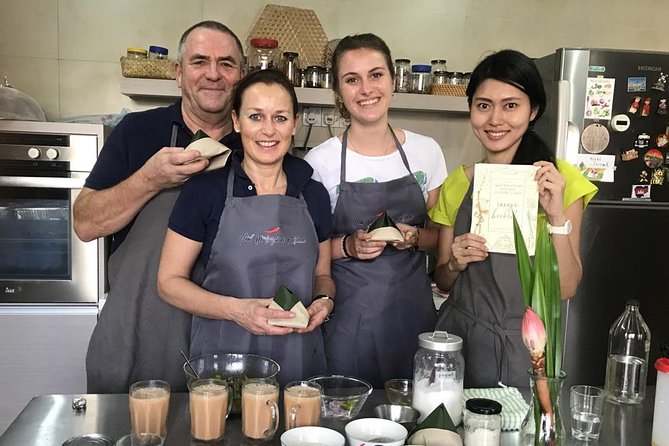
- Family-run setup with Sara Khong: professional cook and cookbook author, teaching from her home kitchen
- Garden tour for real ingredients: you get to see, touch, smell, and taste plants used in everyday Malaysian food
- Flower tea to start: a calm, local opening before you get busy in the kitchen
- Hands-on street food cooking: you actively make five dishes, not just watch from a seat
- Fresh herbs-in-the-class: turmeric and curry leaves are part of the walk, and those flavors show up in the food
- Meal plus culture chat: you sit down together at the end and talk about Malaysian food and lifestyle
Why Sara Khong’s family kitchen is the real draw
This class works because it feels like you are visiting a household that actually cooks. The setting is outside the city, but it is not remote or fancy. It is practical. You learn by doing, and you learn in a way that translates to your own kitchen later.
Sara Khong welcomes you to her family home and kitchen. She is a professional cook and an author of four Malaysian cookbooks, so her teaching style has structure. But it still stays warm and personal. That matters, because Malaysian street food can look like magic if you only see photos. Here, you get the logic behind the flavors—how herbs, aromatics, and seasonings come together.
The small-group format is a big deal too. The class caps at six people, so you are not competing for attention. If you are unsure about a paste texture or the balance of sweet, salty, and tang, you get hands-on guidance.
And yes, it is designed for beginners and intermediate home cooks alike. Even people who rarely cook can follow along and finish dishes. The key is careful step-by-step coaching and a kitchen that is set up for you, not for show.
Learn the rempah properly, more kitchens
Flower tea and a 50+ plant garden walk before you cook
You start with a glass of flower tea. It is a nice reset before the work begins. Then you head out to the organic edible garden where you explore more than 50 herbs, vegetables, and flowers used in Malaysian cooking.
This part is not just a scenic stroll. You are meant to use your senses. You see plants like turmeric, and you also learn what curry leaves smell like before they hit a wok. The experience nudges you toward how Malaysian cooks build flavor: with layers, aromatics, and fresh greenery.
Touch and smell help your brain remember the flavors later in the kitchen. When you are chopping something that you already handled outside, the steps feel less mysterious. It also helps you understand substitutions if you cook at home. You learn the role of an ingredient, not only the recipe.
Garden-to-kitchen also makes the class feel grounded in real food culture. You are not learning Malaysian cuisine as a distant concept. You are learning it as something grown, used, and cooked in a home setting.
The garden walk also sets expectations for the main meal. You are going to taste the “why” behind street-food flavor: the freshness, the balance, and the way herbs are treated as core ingredients rather than garnish.
The hands-on cooking class: how you learn street food step-by-step
Now for the part you came for: cooking. You will make five Malaysian dishes of your choice in a real kitchen. This is not a spectator activity. You are standing, prepping, and cooking with guidance.
One-to-one attention is built in through the small group. Sara coaches you through ingredient selection and preparation, and she keeps an eye on the details. That is what turns a recipe into a skill. For example, if you get stuck on how something should look or smell, you can ask right then instead of guessing and hoping for the best.
The class focuses on Malaysian street food, which is often fast, flavorful, and flexible. That can be intimidating if you have only cooked Western-style dishes that follow strict timing. Here, you learn technique and the logic of flavor building so the street-food style makes sense.
In practice, expect a lot of active moments: mixing, cutting, tasting, adjusting, and cooking. You also get a recipe booklet, so you can repeat the dishes later rather than relying on memory.
A nice extra: the household conversation adds context while you work. When someone explains how families eat and cook, it stops feeling like you are collecting recipes. It feels like you are learning a kitchen rhythm.
Which Malaysian dishes you might cook during your 4 hours
The class lets you choose five dishes, which is great if you already know what you want to bring home. You are not locked into a rigid menu that may not fit your tastes.
Some dishes commonly prepared include:
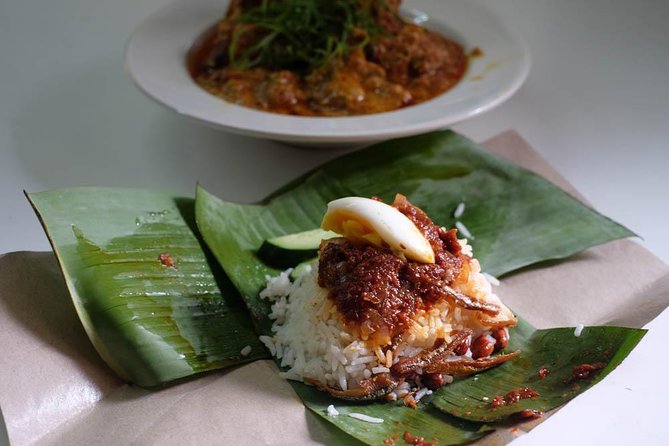
- Nasi lemak
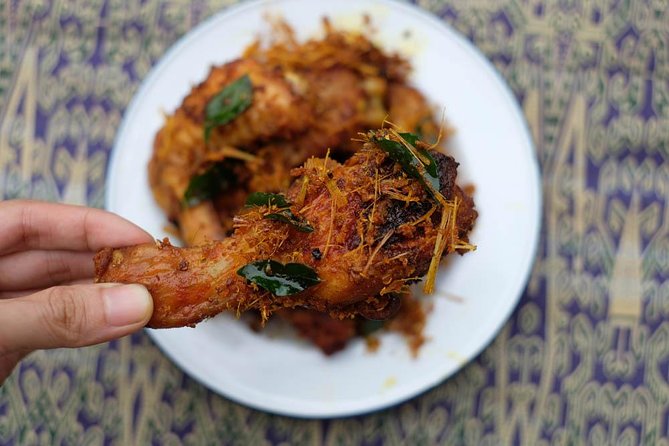
- Chicken rendang
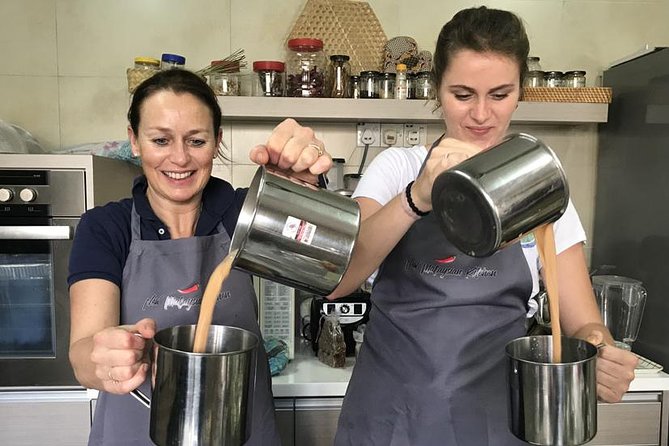
- Teh tarik (pulled tea)
- Onde-ondeh
- Four-angled bean salad (a specific salad option)
Your exact selection depends on your picks and what the kitchen is preparing that day. But this menu mix gives you a solid spread: rice and coconut flavors, a rich meat curry, a signature tea ritual, and dessert plus a fresh salad component.
Even if you do not eat spicy food, the class can still work for you. The bigger value is learning the methods: how sambal-style flavors get built, how rendang flavors deepen, how tea turns into a foam-topped drink, and how dessert textures are formed. Those techniques matter even when you change a specific ingredient.
And because you cook what you choose, the meal at the end feels like your own work. That is one of the reasons people call this a highlight of their KL stay.
What you eat at the end, and the culture chat that makes it stick
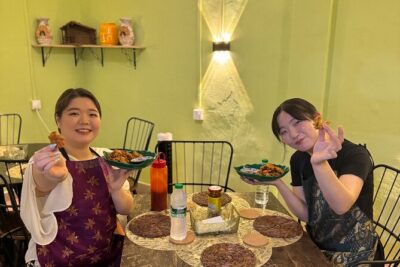
After cooking, you eat together. The meal is built from your dishes, so you get to taste results immediately. It is also a confidence boost. Instead of leaving with photos and instructions, you leave with a lunch that proves you can do it again.
The shared table time matters more than people expect. You also chit-chat with the family about Malaysian food, culture, and lifestyle. This is where the experience moves beyond cooking technique. You start understanding why certain flavors are normal at home, why some dishes show up often, and how ingredients fit everyday routines.
It is also a chance to ask follow-up questions while the food is fresh. If you realize you want to tweak sweetness or adjust spice, you can ask in the moment. That kind of feedback is hard to replicate from a cookbook.
If your goal is to bring something back that feels like more than a souvenir, this is how you do it. The recipes help, but the context helps even more.
Wax, dye and pewter, more maker sessions

Price and value: is $150 worth a half-day in Kuala Lumpur?
At $150 per person for about four hours, this is not a budget cooking class. But it also is not a factory experience. You are paying for a private, small-group setting and active instruction in a home kitchen.
Here is what pushes the value higher:
- Maximum six people means you get real attention, not generic tips
- Hands-on cooking of five dishes means more technique per hour
- Garden visit with sensory learning plus fresh ingredient context
- Recipe booklet so you can repeat at home
- A family-run atmosphere with personal cultural conversation
If you are the kind of traveler who eats Malaysian food and wants to understand it, this makes sense. You will likely spend more than $150 in meals across a few days anyway. The difference is you leave with skills, not only taste memories.
If you mainly want something passive, like a quick food tasting without prep work, you might feel the price more. But if you are happy working at a stove and you enjoy learning by doing, the cost starts to look reasonable fast.
Practical details you should know before you go
The class is in Kuala Lumpur, with the start location at No. 2 Jalan 11, Taman Len Seng, 56000. It ends back at the meeting point.
It runs in the morning. The listed hours show Monday to Friday, 9:00 AM to 1:00 PM. So plan a day where you can focus, arrive on time, and then relax after lunch.
It is also near public transportation, which helps if you do not want to fight traffic or hunt for parking. The ticket is mobile, so you will want access to your phone when you check in.
What to expect in the experience itself is straightforward:
- flower tea start
- garden walk with sensory ingredient learning (over 50 plants)
- cooking five selected dishes in a real kitchen
- eating the meal together
- chatting about food and lifestyle
Who this class is best for
This works especially well if you:
- love Malaysian street food and want to learn the mechanics behind it
- want a small-group experience with lots of hands-on teaching
- prefer home-style instruction over a demo format
- plan to cook after your trip and want a recipe booklet
It also suits couples, small friend groups, and families where people want to share the work and the meal together. Because the group is tiny, it tends to feel personal and approachable rather than formal.
Should you book New Malaysian Kitchen Cooking Class and Garden Tour?
Yes, I would book it if your travel style includes food skills, not just food stops. The combination of an organic garden walk plus hands-on cooking with Sara Khong is the kind of experience that stays useful after you leave.
I would think twice only if you strongly prefer a passive activity, or if your schedule cannot handle a focused morning class. Otherwise, this is a smart way to get deeper into Malaysian cuisine while still feeling like a visit to real people, in a real kitchen.
If you are in KL and you want one standout food experience that teaches you how to recreate flavors at home, this is a very solid choice.
FAQ
How many people are in the group?
The class has a maximum of 6 travelers, so you get personalized attention while you cook.
How long is the cooking class and garden tour?
It runs for about 4 hours.
What dishes will I cook?
You will cook five Malaysian dishes of your choice, including options such as nasi lemak, chicken rendang, teh tarik, onde-ondeh, and a four-angled bean salad.
Do I get recipes to take home?
Yes. You receive a recipe booklet so you can cook the dishes again at home.
Where do I meet, and where does it end?
The start location is No. 2, Jalan 11, Taman Len Seng, 56000. The activity ends back at the meeting point.
What time does it usually run?
It is listed for Monday to Friday, 9:00 AM to 1:00 PM.
What is the cancellation policy?
You can cancel for free up to 24 hours in advance for a full refund. If you cancel less than 24 hours before the start time, the amount paid will not be refunded.
Filed Under Kuala Lumpur
- Kuala Lumpur: Batu Caves Half-Day Tour with Pick-Up Option
★ 4.5 · 4,288 reviews - Private Half-Day Batu Caves and Cutural Tour in Kuala Lumpur
★ 5.0 · 3,107 reviews - Sambal Streets Kuala Lumpur Food Tour with 15+ Tastings
★ 5.0 · 2,438 reviews - Historical Malacca Guided Day Tour (Shared Tour)
★ 5.0 · 2,172 reviews
Made in KL, by You
- Batu Caves & Malaysian Handicraft Tour: Pewter & Batik Experience
★ 4.5 · 316 reviews - Batu Caves and Sari Experience with Batik Workshop
★ 5.0 · 181 reviews - LaZat Malaysian Cooking Class
★ 5.0 · 87 reviews - Malaysia Cooking Classes With Local
★ 5.0 · 87 reviews
Rempah Homework
- LaZat Malaysian Cooking Class
★ 5.0 · 87 reviews - Malaysia Cooking Classes With Local
★ 5.0 · 87 reviews - Market Visit & Private Hands-on Cooking Class at Daun Senja
★ 5.0 · 51 reviews - Malaysian Hands-On Cooking Class : Masala Medley
★ 5.0 · 24 reviews
Fresh Reviews from the Klang Valley
- Kuala Lumpur by Night: Food, Culture & City Lights Tour”
★ 4.5 · 3 reviews - Kuala Lumpur Customizable Tour
★ 5.0 · 3 reviews - National Zoo with Giant Panda
★ 3.5 · 3 reviews - Kuala Lumpur City to Kuala Lumpur International Airport Transfer
★ 5.0 · 3 reviews - Private Magical View With Petronas Tower & Cultural Dinner
★ 4.2 · 3 reviews
Batik & Pewter Workshops, compared.
 ★ 4.5Batu Caves & Malaysian Handicraft Tour: Pewter & Batik ExperienceFrom $29316 reviews
 ★ 5.0Batu Caves and Sari Experience with Batik WorkshopFrom $54181 reviews
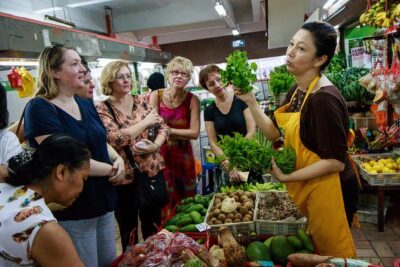 ★ 5.0LaZat Malaysian Cooking ClassFrom $13087 reviews
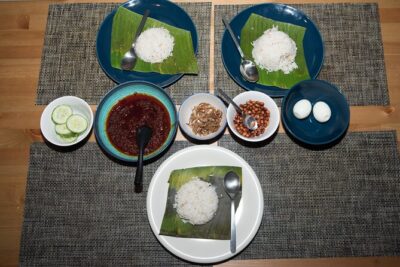 ★ 5.0Malaysia Cooking Classes With LocalFrom $5987 reviews
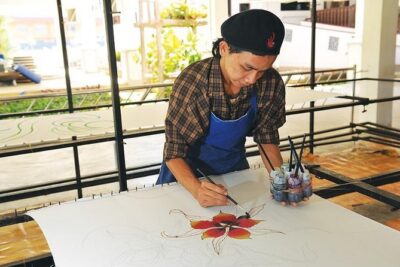 ★ 3.5Batu Caves and Malaysian Crafts Tour from Kuala LumpurFrom $2474 reviews
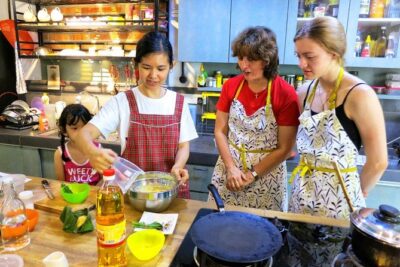 ★ 5.0Market Visit & Private Hands-on Cooking Class at Daun SenjaFrom $13051 reviews
 ★ 5.0Batik Coloring Workshop by myBatikFrom $1648 reviews
 ★ 5.0Malaysian Batik Experience-HandkerchiefFrom $1737 reviews
Browse the lists this tour appears in